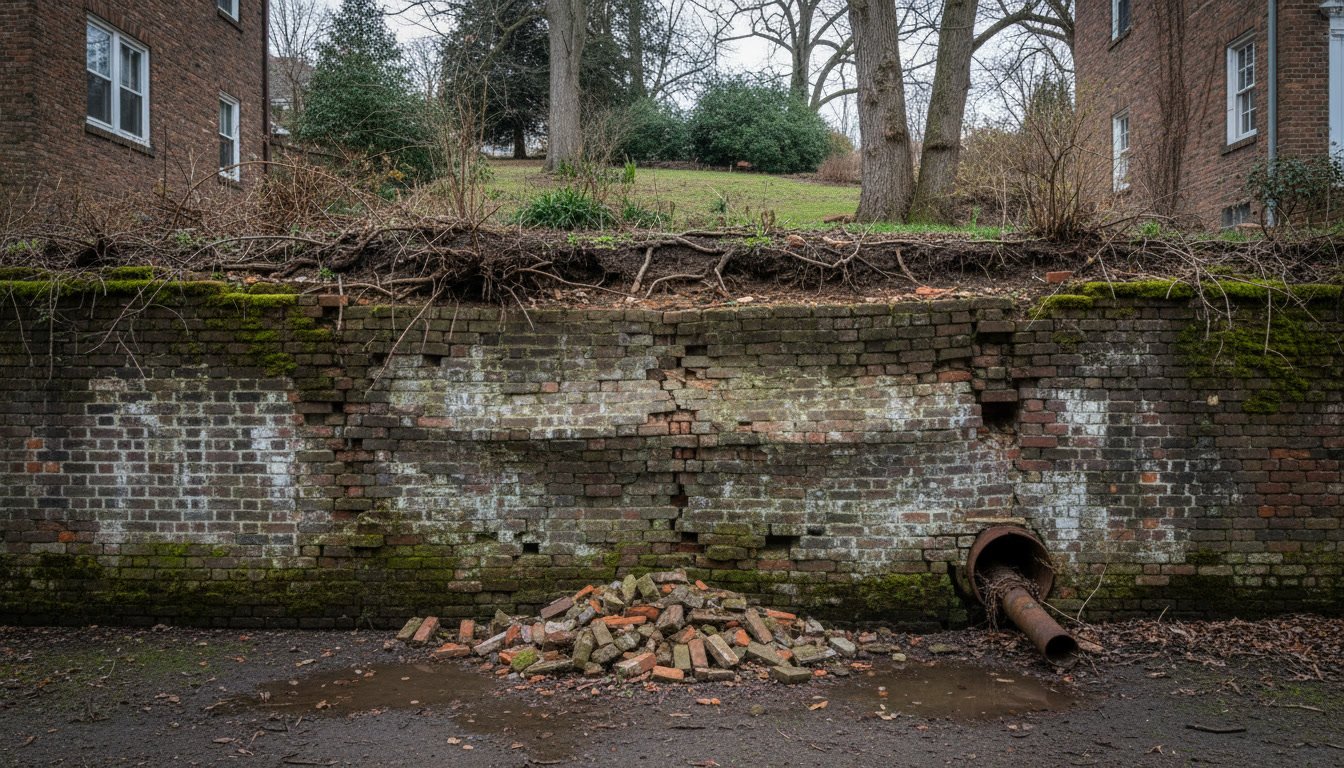
A brick retaining wall needs restoration when it displays visible cracks wider than a quarter-inch, bulging sections that bow outward, persistent tilting or leaning, deteriorating mortar joints, or water seepage through the wall face. These symptoms indicate structural compromise that, if left unaddressed, will lead to partial or complete wall failure. Early intervention prevents catastrophic collapse and costly emergency repairs.
Why Brick Retaining Walls Fail Over Time
Retaining walls carry enormous lateral pressure from the soil they hold back. Every cubic yard of saturated soil can weigh more than 3,000 pounds, creating constant stress on the wall structure. Brick walls rely on two critical elements to resist this force: the structural integrity of the masonry units themselves and the bonding strength of the mortar joints.
Over years of freeze-thaw cycles, moisture penetration, and soil movement, both components gradually weaken. Water infiltration is the primary enemy. When moisture enters through damaged mortar or compromised bricks, it expands during freezing temperatures, forcing materials apart from the inside. This process accelerates exponentially once it begins.
Most brick retaining walls in the St. Louis area were built without modern drainage systems or proper waterproofing. Many lack weep holes to relieve hydrostatic pressure. As a result, these walls accumulate stress season after season until visible failure signs emerge.
Cracks That Signal Immediate Structural Concern
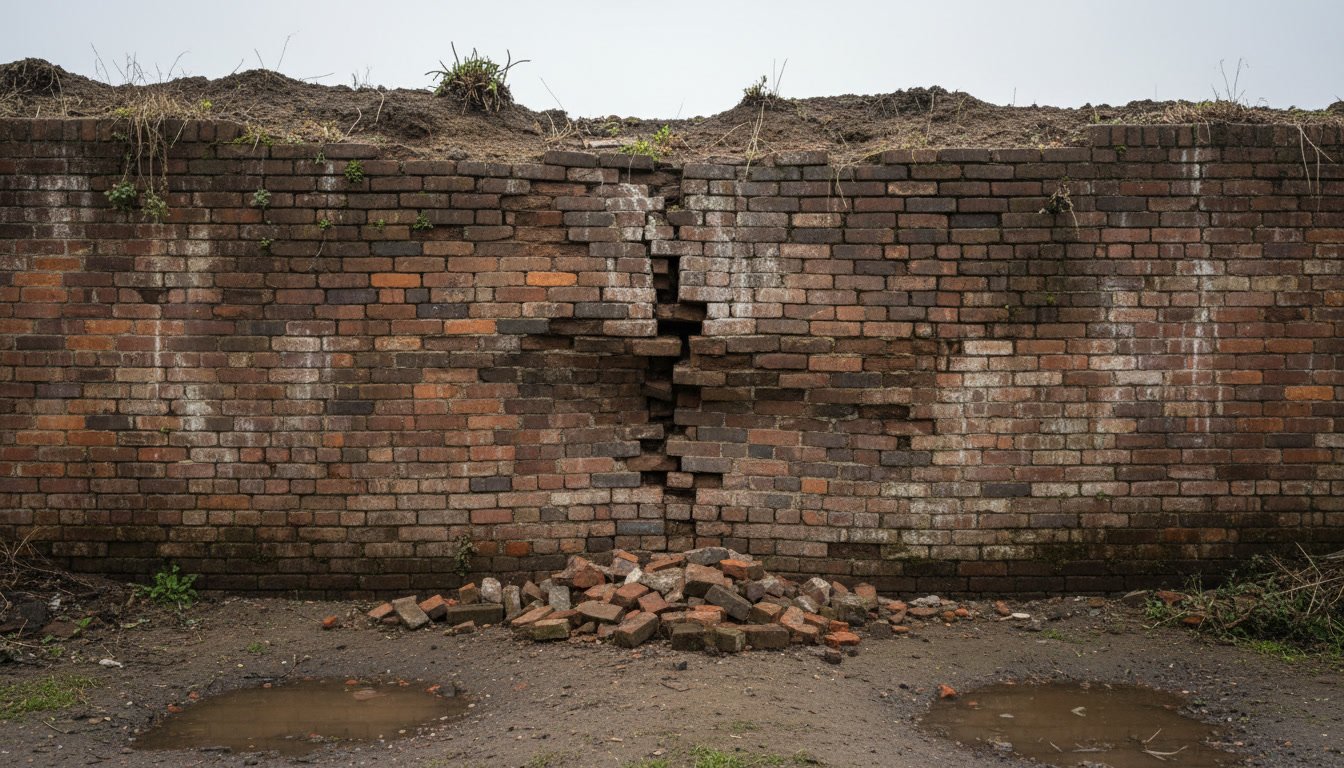
Not all cracks are created equal. Hairline cracks smaller than one-eighth inch often result from normal settling and pose minimal immediate risk. However, cracks wider than a quarter-inch indicate active structural movement. Horizontal cracks running along mortar bed joints suggest the wall is responding to excessive lateral pressure.
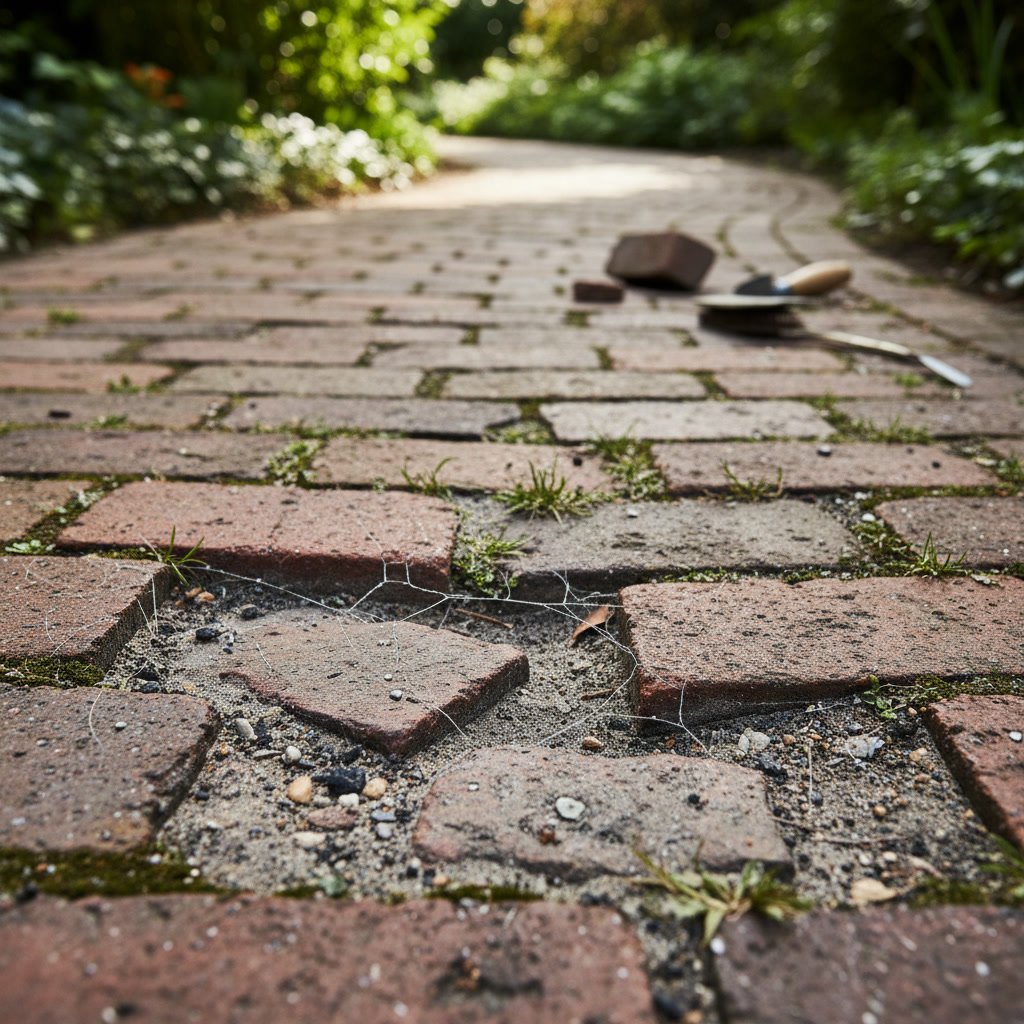
Stair-step cracks that follow the mortar joints in a diagonal pattern reveal differential settling. This happens when one section of the wall foundation sinks faster than adjacent sections. Vertical cracks that cut through brick units rather than following mortar lines are particularly concerning because they indicate forces strong enough to fracture the masonry itself.
The location of cracks matters as much as their size. Cracks near the base of the wall or at corners represent areas under maximum stress. If you notice multiple crack types appearing simultaneously, the wall has likely progressed beyond minor repair needs.
Bulging and Bowing: Visible Signs of Pressure Overload
When a retaining wall begins to bulge or bow outward, it has reached a critical stage. The wall face should form a straight vertical or slightly battered plane. Any convex curvature indicates the wall is losing its battle against soil pressure.
Use a long straightedge or taut string to check the wall face. Even a bulge of one to two inches over a 10-foot span represents serious structural compromise. The wall is actively deforming under load, and the rate of movement typically accelerates once bowing begins.
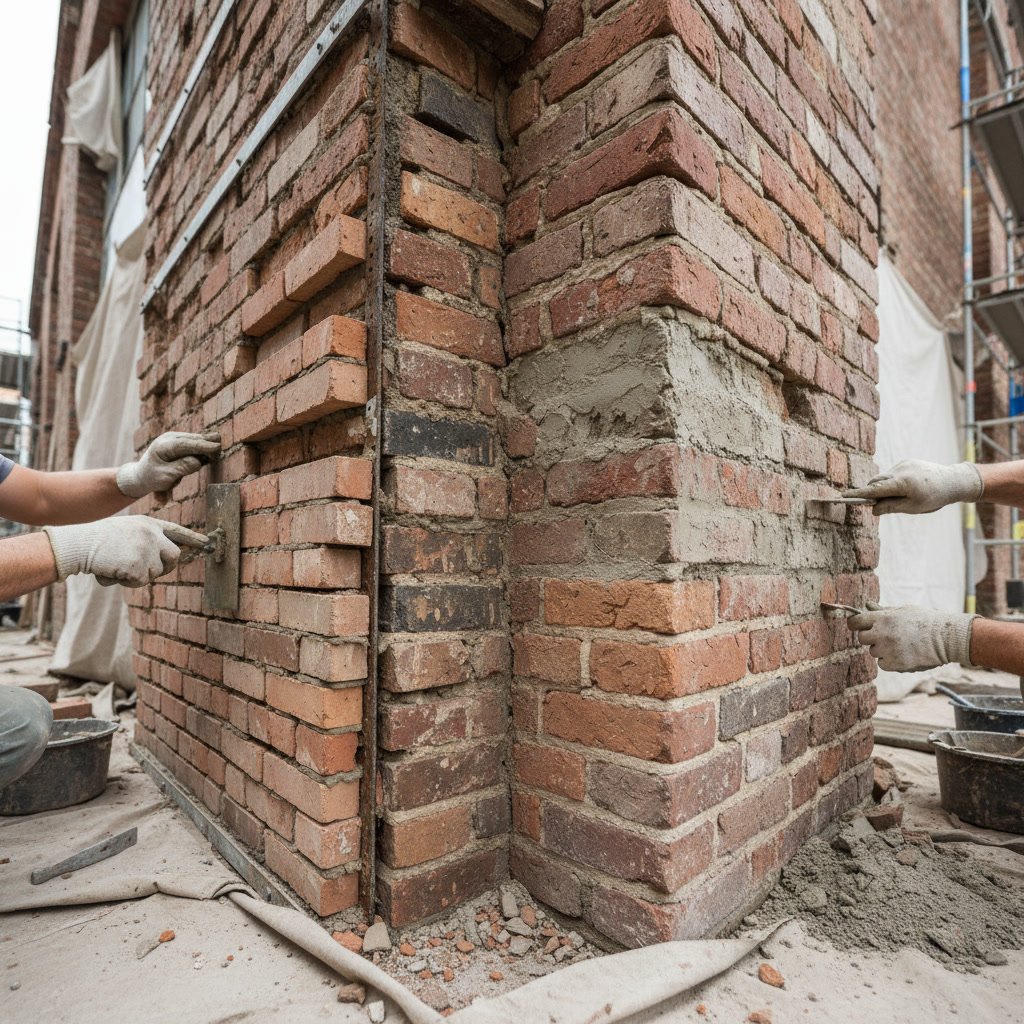
Bulging often occurs in the middle third of the wall height, where lateral forces concentrate. This type of deformation signals that internal wall ties or bonding elements have failed, allowing the outer wythe of brick to separate from the backing. Professional masonry restoration becomes urgent at this stage.
Tilting and Leaning from Foundation Movement in Affton
A retaining wall should stand plumb or maintain its designed batter angle. When the entire wall structure leans backward into the retained soil or tips forward, foundation problems are at work. This differs from bulging because the wall moves as a single unit rather than deforming in sections.
Clay-rich soils common throughout the region expand when wet and shrink when dry. This cycle creates seasonal foundation movement. Over years, inadequate footings settle unevenly, causing progressive tilting. Walls built without proper footings below the frost line are especially vulnerable.
Measure tilt by holding a level against the wall face. Any deviation beyond the original design angle indicates active movement. If the lean increases noticeably after heavy rain or spring thaws, you are witnessing real-time foundation instability that will only worsen.
Mortar Joint Deterioration and Missing Pointing
Mortar serves as the binding agent that transforms individual bricks into a unified structural system. When mortar joints deteriorate, the wall loses load distribution capacity. Each brick begins acting independently rather than as part of an integrated unit.
Check mortar depth by pressing a screwdriver into joints. Sound mortar resists penetration. Deteriorated mortar crumbles easily or allows the tool to sink more than half an inch. Missing mortar creates voids that allow water intrusion, accelerating damage to adjacent areas.
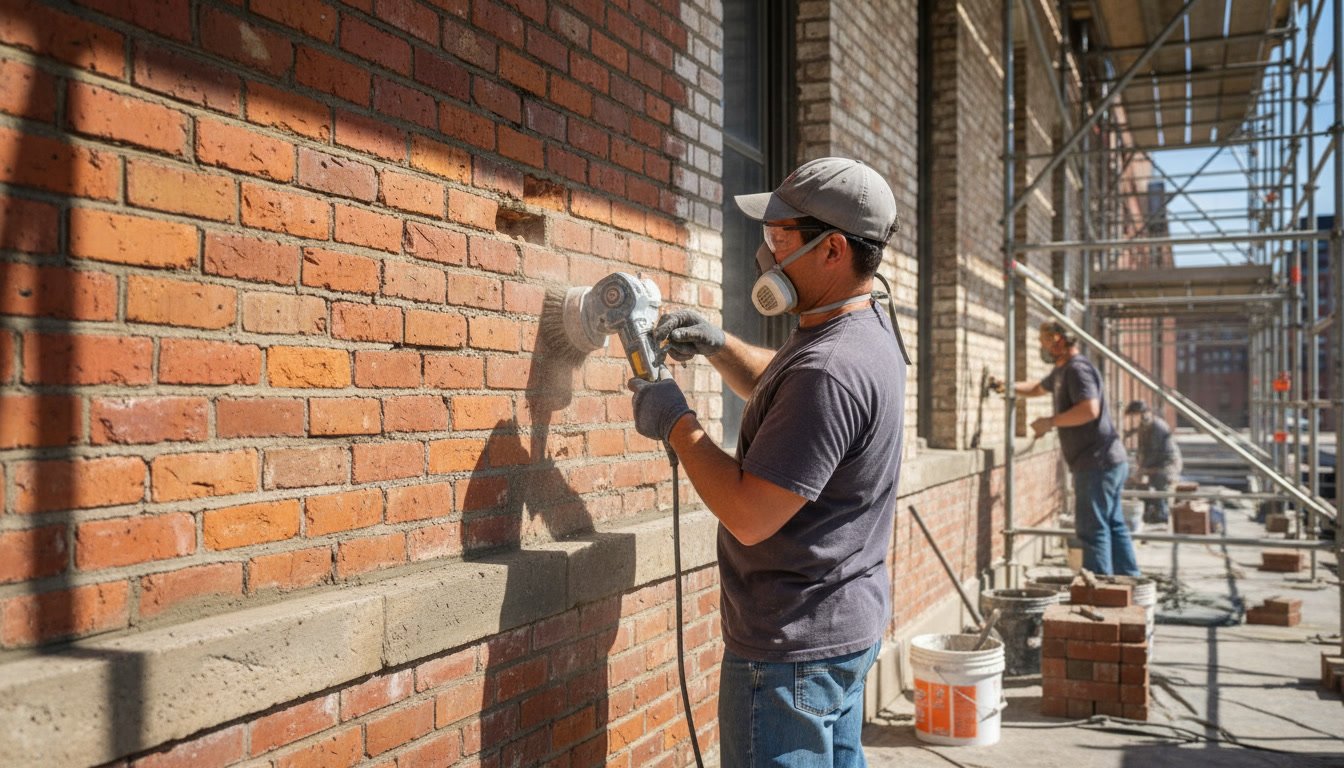
The pointing on retaining walls faces particularly harsh conditions compared to vertical building walls. Constant moisture exposure and freeze-thaw action break down mortar chemistry. Professional tuckpointing replaces compromised mortar before structural integrity fails completely. Many homeowners underestimate how quickly deterioration spreads once it begins in retaining wall applications.
Water Seepage, Staining, and Efflorescence Patterns
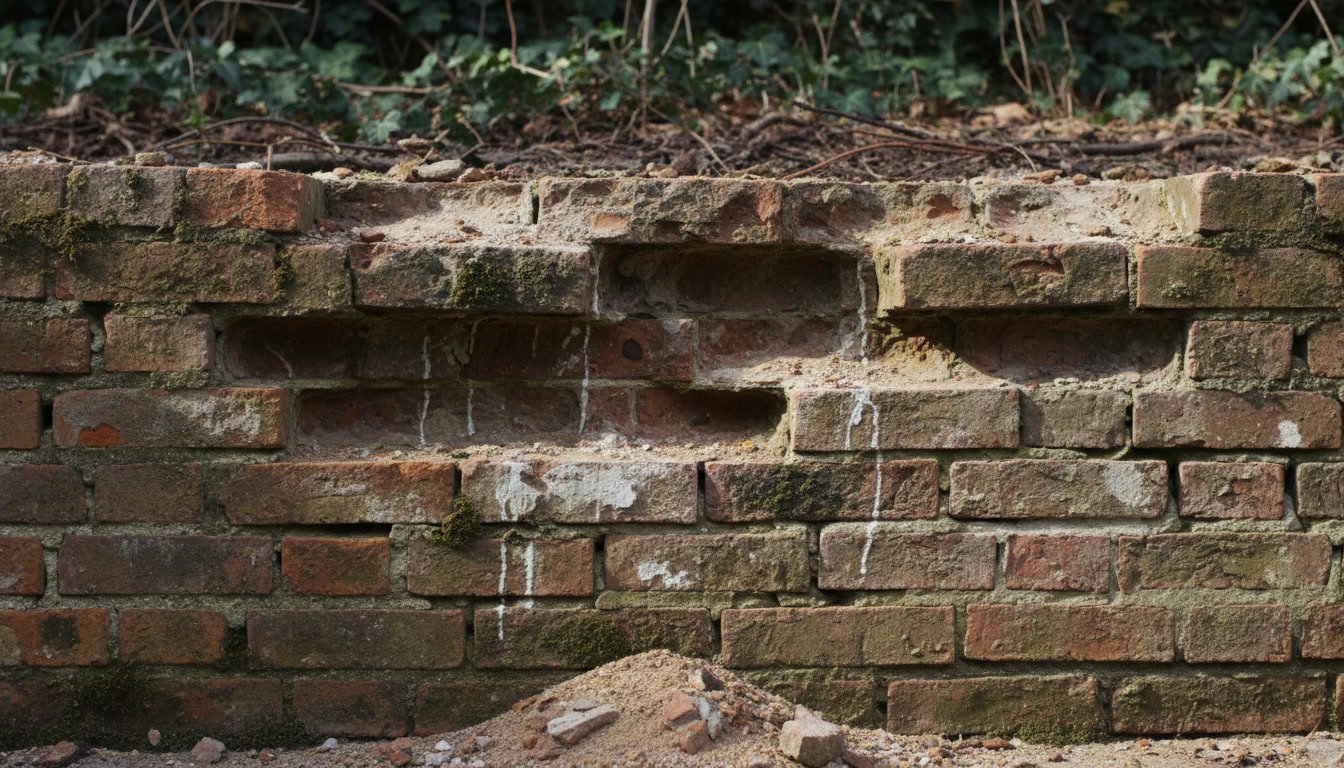
Water should never flow through the face of a properly functioning retaining wall. Persistent wet spots, even during dry weather, indicate the wall has developed pathways for water migration. This happens when cracks or failed mortar joints allow moisture to travel through the masonry.
White crystalline deposits called efflorescence appear when water dissolves salts within the masonry and deposits them on the surface as it evaporates. While efflorescence itself does not damage the wall, it serves as a visible marker of active water movement. The water causing efflorescence is simultaneously breaking down mortar and brick.
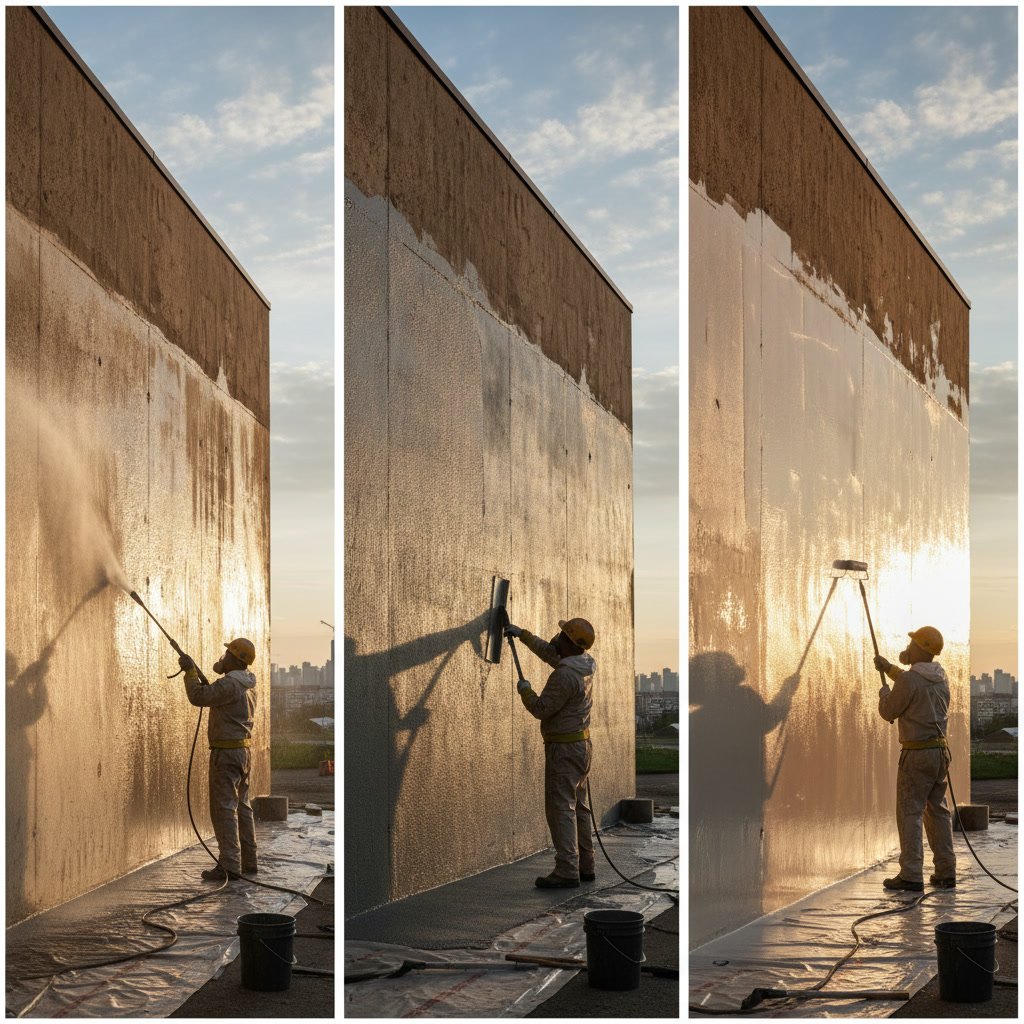
Dark staining patterns below cracks or joints reveal regular water flow paths. These areas experience accelerated freeze-thaw damage because they remain saturated longer. Similarly, if you observe water pooling at the wall base rather than draining away, poor drainage is likely contributing to structural stress. Professional weatherproofing addresses these moisture intrusion issues before they compromise structural elements.
Brick Spalling and Surface Deterioration
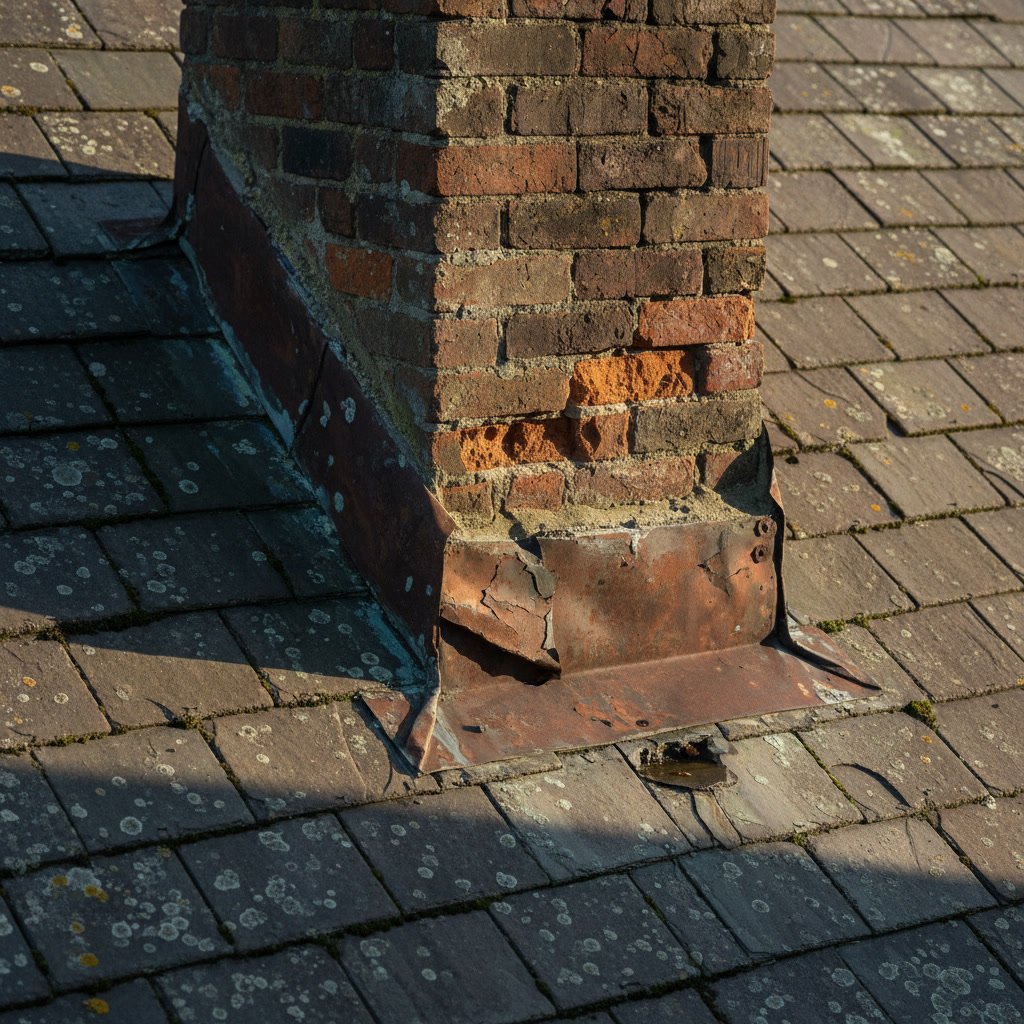
Spalling occurs when the brick face fractures and breaks away in layers or chunks. This happens when water penetrates the brick, freezes, and forces the outer surface to separate. Once spalling begins, the damaged brick loses weather resistance and deteriorates rapidly.
Early-stage spalling appears as small flakes or chips missing from brick corners and edges. Advanced spalling creates deep pits or removes entire brick faces. Bricks near the base of retaining walls spall faster because they experience maximum moisture exposure and soil contact.
Soft or friable bricks that you can scrape with a fingernail have lost structural integrity. These units no longer contribute to wall strength and create weak points in the structure. Similar deterioration patterns affect other masonry elements throughout your property, as described in our guide on signs your brick exterior needs restoration.
Soil Erosion and Washout Behind the Wall
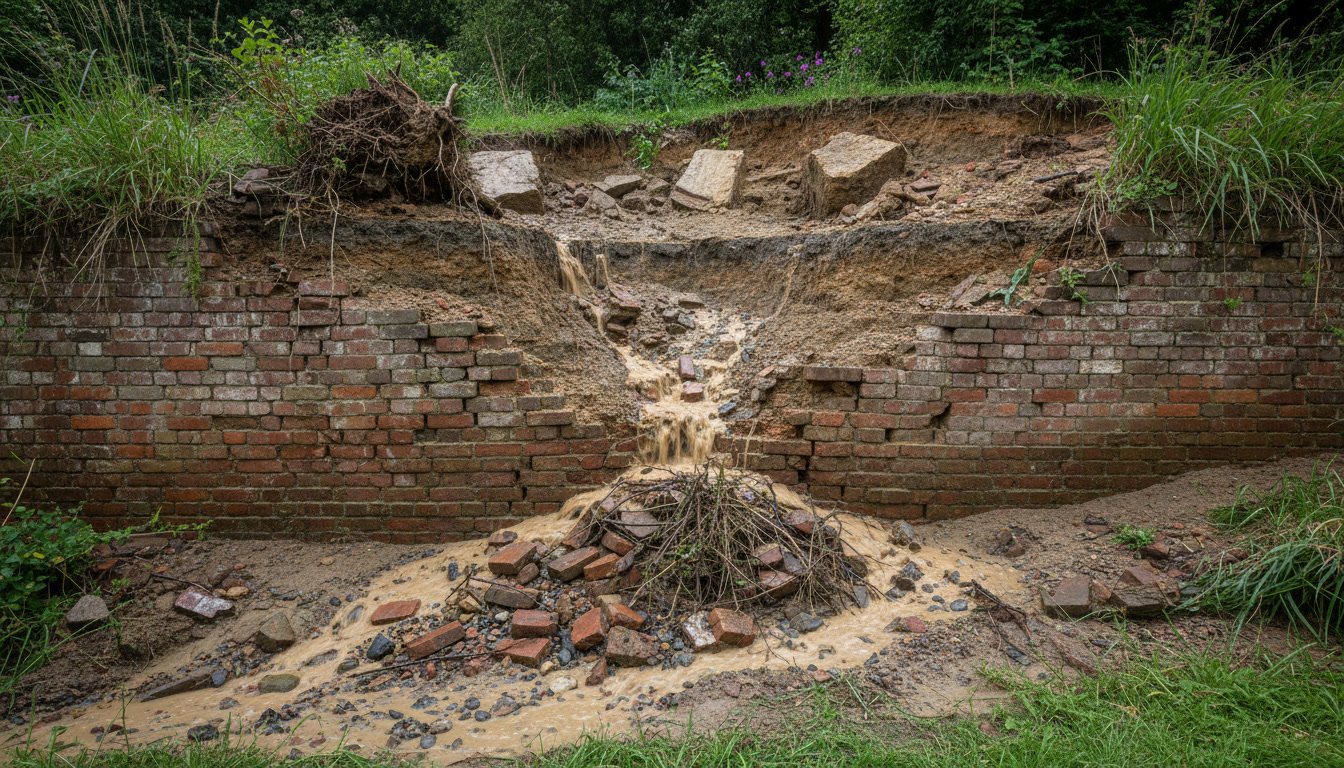
The soil retained by your wall provides both the load the wall must resist and the structural support that keeps it stable. When soil erodes from behind the wall, voids develop that change load distribution patterns. The wall may tilt into these voids or experience concentrated pressure at remaining contact points.
Look for sinkholes, depressions, or settling in the lawn or garden bed above the wall. These surface indicators reveal subsurface erosion. Water running down the wall face or emerging from joints suggests drainage pathways are carrying soil particles away.
Tree roots near retaining walls create another erosion mechanism. As roots grow and die, they form channels for water flow and soil migration. They also exert pressure that can crack or displace masonry. Address vegetation management as part of comprehensive wall maintenance.
Separated or Displaced Coping and Cap Stones
The cap or coping at the top of a retaining wall serves multiple functions. It sheds water away from the wall core, prevents moisture intrusion from above, and often ties the outer wythe to the backing. When caps separate, shift, or fall off, they expose the vulnerable wall top to direct water infiltration.
Missing or loose cap stones indicate mortar failure or structural movement severe enough to break the bond. Water entering through the exposed top rapidly damages interior wall components that were never designed for direct weather exposure.
Check whether cap stones rock when you push them or show gaps at their joints. Any movement suggests the mortar has failed. Replace damaged caps promptly because the accelerated deterioration they cause affects the entire wall structure below.
When to Call Professionals Instead of DIY Repair
Minor mortar touch-ups on small garden walls may fall within homeowner capability, but retaining walls present different challenges. These structures carry life-safety implications. A collapsing retaining wall can damage property, injure people, or create liability issues.
Any wall taller than three feet, any wall showing multiple damage types simultaneously, or any wall displaying active movement requires professional evaluation. Structural assessment determines whether repair can stabilize the existing wall or whether partial or complete rebuilding is necessary.
Professional masons evaluate hidden factors homeowners cannot assess without experience: footing adequacy, drainage system function, soil conditions, and structural tie integrity. They also understand building codes and engineering requirements that govern retaining wall construction. Attempting repairs without addressing root causes wastes money and delays proper solutions.
Protecting Your Property Investment Through Early Action
The difference between minor restoration and complete wall replacement often comes down to timing. Addressing problems when they first appear costs a fraction of emergency repairs after collapse. A wall showing early warning signs might need repointing and drainage improvements. The same wall ignored for two more years may require complete demolition and rebuilding.
Schedule annual inspections, particularly after severe weather or seasonal transitions. Document the wall condition with dated photographs. This creates a baseline for tracking whether damage is static or progressing. Progressive damage demands immediate professional attention.
Understanding these warning signs helps you protect one of your property’s important structural elements. Brick retaining walls provide decades of service when properly maintained, but they cannot repair themselves. The structural stress that creates visible damage continues working 24 hours a day, gradually overwhelming the wall’s remaining capacity until failure becomes inevitable.
If you have noticed any of these warning signs in your brick retaining wall, Massey Tuckpointing & Masonry provides comprehensive structural evaluations and restoration services throughout the greater St. Louis area. Our family-owned business combines decades of masonry experience with the attention to detail that prevents minor issues from becoming major failures. Contact us at +13142009488 to schedule an inspection and receive a detailed assessment of your wall’s condition and recommended solutions.