Brick veneer and solid brick walls demand fundamentally different restoration approaches because they serve distinct structural roles in your home. Brick veneer acts as a decorative exterior layer attached to a wood or steel frame, while solid brick walls carry the building’s structural load themselves. The repair techniques, materials, anchoring methods, and even the risks of improper work differ significantly between the two, making identification the critical first step before any brick restoration begins.
How to Tell Whether Your Home Has Veneer or Solid Brick
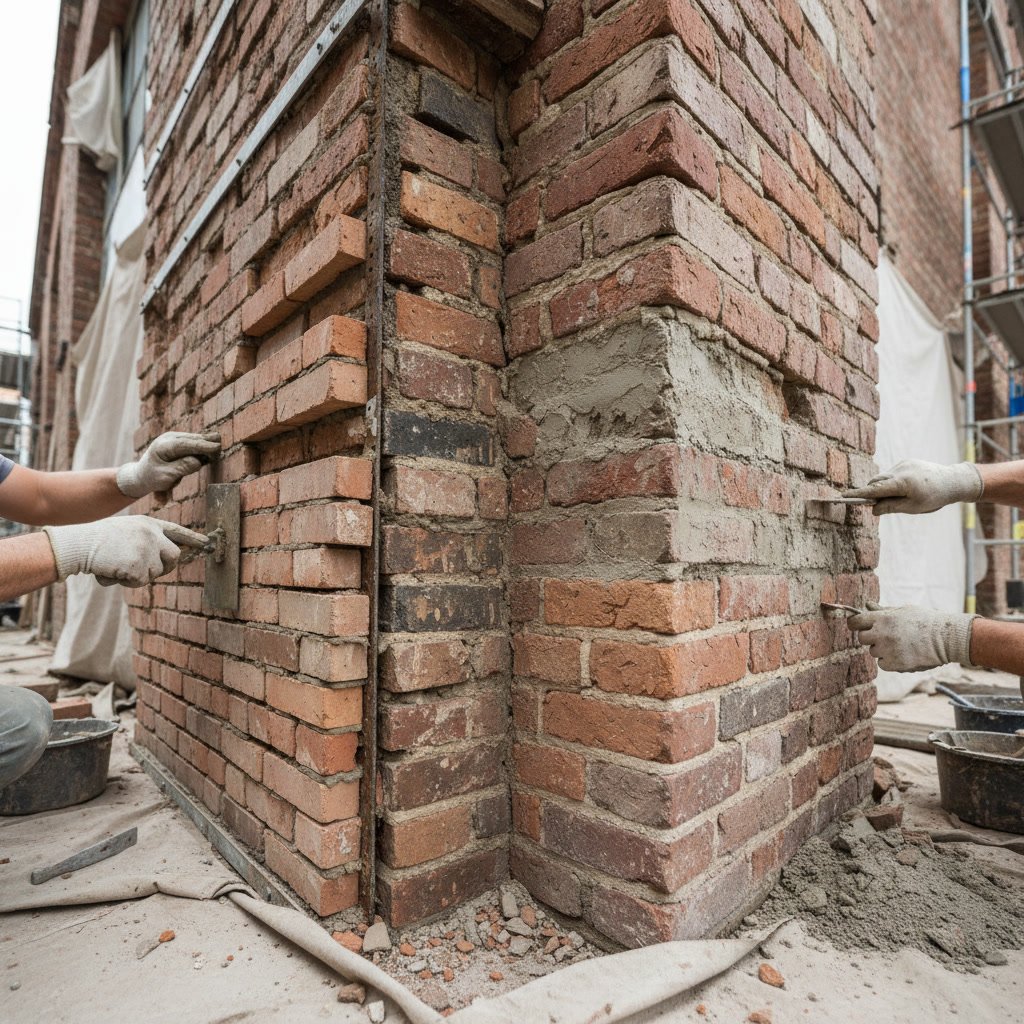
Most homes built after 1950 use brick veneer construction, while structures from the early 1900s typically feature solid brick. You can identify your wall type by measuring the thickness at a window or door opening. Solid brick walls are at least eight inches thick, often 12 inches or more, and you’ll see alternating header and stretcher courses where bricks run perpendicular and parallel to the wall face. Veneer walls measure around four inches thick with a visible gap between the brick and the interior wall, and the brick pattern typically shows only stretcher courses because the veneer is one layer deep.
Another reliable test involves looking at your basement or crawl space foundation. If the foundation material transitions directly into brick without a gap or frame, you likely have solid construction. Veneer homes show a clear wood or steel frame with the brick layer sitting on a separate ledge or shelf angle.
Why Construction Method Changes Everything About Restoration
The structural role of brick determines the scope and risk level of restoration work. Solid brick walls bear the weight of floors, roofs, and everything above them. Removing damaged bricks or cutting into mortar without proper shoring can compromise structural integrity and create dangerous conditions. Repairs must maintain load-bearing capacity throughout the process, often requiring temporary supports and staged work sequences.
Brick veneer carries only its own weight, anchored to the frame behind it with metal ties. The primary concerns during veneer restoration involve maintaining proper attachment to the backing, preserving the drainage cavity behind the brick, and preventing moisture intrusion that could damage the frame. The work is generally less structurally sensitive but requires careful attention to the tie system and weep holes that allow moisture to escape.
Structural Considerations for Solid Brick Repairs
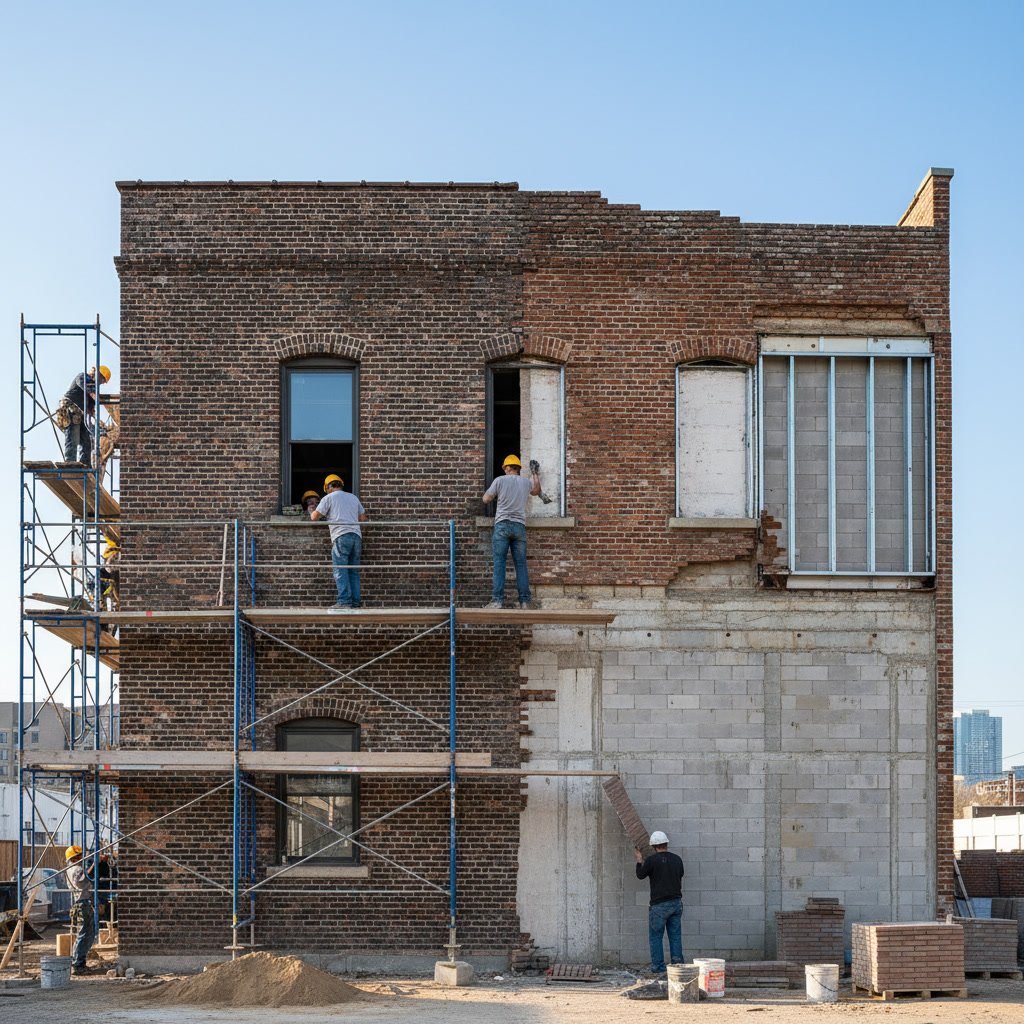
Solid brick restoration often requires engineering consultation, especially when large sections need replacement or when repointing work extends across significant wall areas. The mason must sequence the work to avoid removing too much material at once. A common rule limits removal to no more than 25% of the wall area in any single section when dealing with load-bearing masonry.
When replacing individual bricks in solid walls, the surrounding masonry must temporarily support the load. Experienced masons cut and remove damaged units carefully, then install new bricks with fresh mortar packed tightly to transfer loads properly. The mortar must cure adequately before adjacent sections undergo work. Rushed timelines that don’t allow proper curing can lead to cracking and settlement issues months later.
Anchoring and Tie Systems in Brick Veneer Restoration in Affton
The metal ties connecting veneer to its backing wall are critical components that determine long-term stability. During brick veneer restoration, masons must verify that existing ties remain intact and properly embedded. Corroded or missing ties allow the veneer to pull away from the structure, creating dangerous bulges and eventual collapse risk.
When replacing veneer bricks, new ties must match the original spacing and type, typically every 16 to 24 inches horizontally and every 16 inches vertically. Modern restoration often upgrades corroded steel ties to stainless steel or hot-dipped galvanized versions that resist rust. The ties must be embedded at least 1.5 inches into the mortar joint and extend into the wall cavity to engage the backing properly. This attention to the tie system separates professional veneer restoration from cosmetic patch jobs that ignore structural attachment.
Mortar Selection and Mixing Differs Between Wall Types
Solid brick walls, especially in older homes, were built with lime-based mortars that remain softer than modern Portland cement mixes. Restoration mortar must match the original’s compressive strength and flexibility. Using modern Type N or Type S mortar in historic solid brick walls creates a harder joint than the surrounding bricks, forcing deterioration into the brick faces rather than the replaceable joints.
Brick veneer typically uses stronger Type N mortar because the veneer doesn’t bear structural loads and modern bricks are fired harder than historic varieties. However, the mortar must still allow slight movement as the frame behind it expands and contracts with temperature changes. A mason restoring veneer must account for this differential movement, while solid brick restoration requires mortar that accommodates centuries-old settling patterns and seasonal moisture cycles.
Step-by-Step Veneer Brick Replacement Process
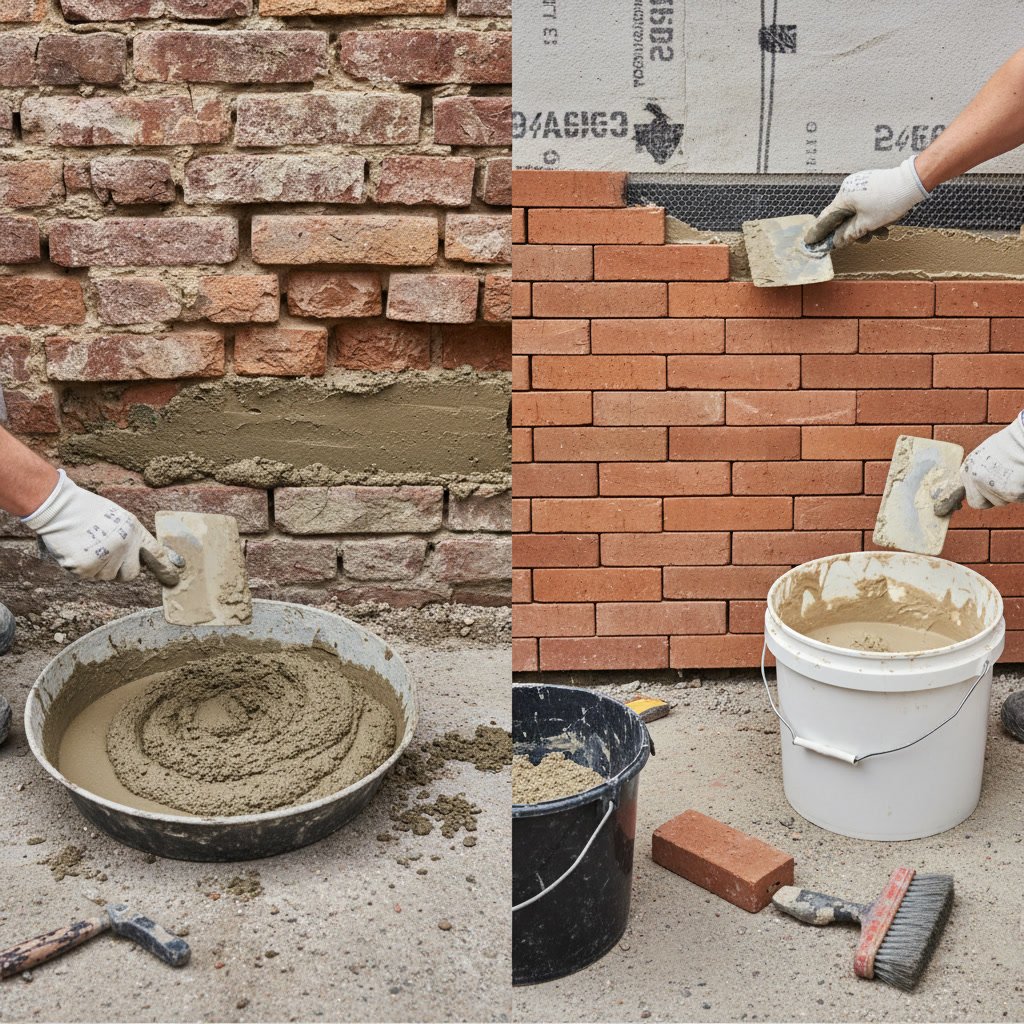
Replacing damaged veneer bricks follows a specific sequence that protects the backing wall and maintains proper drainage. First, the mason carefully grinds out mortar joints surrounding the damaged unit without disturbing adjacent bricks or cutting into the backing material. Second, the brick is removed by breaking it into pieces or gently prying it out, exposing the cavity behind.
Third, the cavity and backing are inspected for moisture damage, deteriorated ties, or missing weep-hole components. Any necessary weatherproofing repairs to the moisture barrier occur at this stage. Fourth, new or additional ties are installed if originals are missing or corroded. Fifth, the replacement brick is cut to size if necessary, dampened to prevent it from drawing water out of fresh mortar, and set with fresh mortar packed completely around all sides.
Finally, the joints are tooled to match the existing profile once the mortar reaches thumbprint hardness. This timing is critical because tooling too early smears the joint, while tooling too late prevents proper compaction and bonding.
Managing Moisture and Drainage in Each System
Solid brick walls absorb and release moisture through their full thickness, relying on lime mortar’s breathability and the mass of multiple brick layers to buffer moisture movement. Restoration work must maintain this breathability by avoiding impermeable sealants or coatings that trap moisture inside the wall. The wall’s ability to dry toward both interior and exterior surfaces prevents freeze-thaw damage and efflorescence.
Brick veneer systems use a different moisture management strategy. The drainage cavity behind the veneer allows water that penetrates the outer layer to drain down and exit through weep holes at the base of the wall. Restoration work must preserve or restore these weep holes and ensure the cavity remains clear of mortar droppings that could block drainage paths. Many veneer failures result from blocked weeps that allow water to accumulate behind the brick, eventually rotting the wood frame or corroding metal ties and shelf angles.
Why Shelf Angles and Lintels Require Special Attention in Veneer
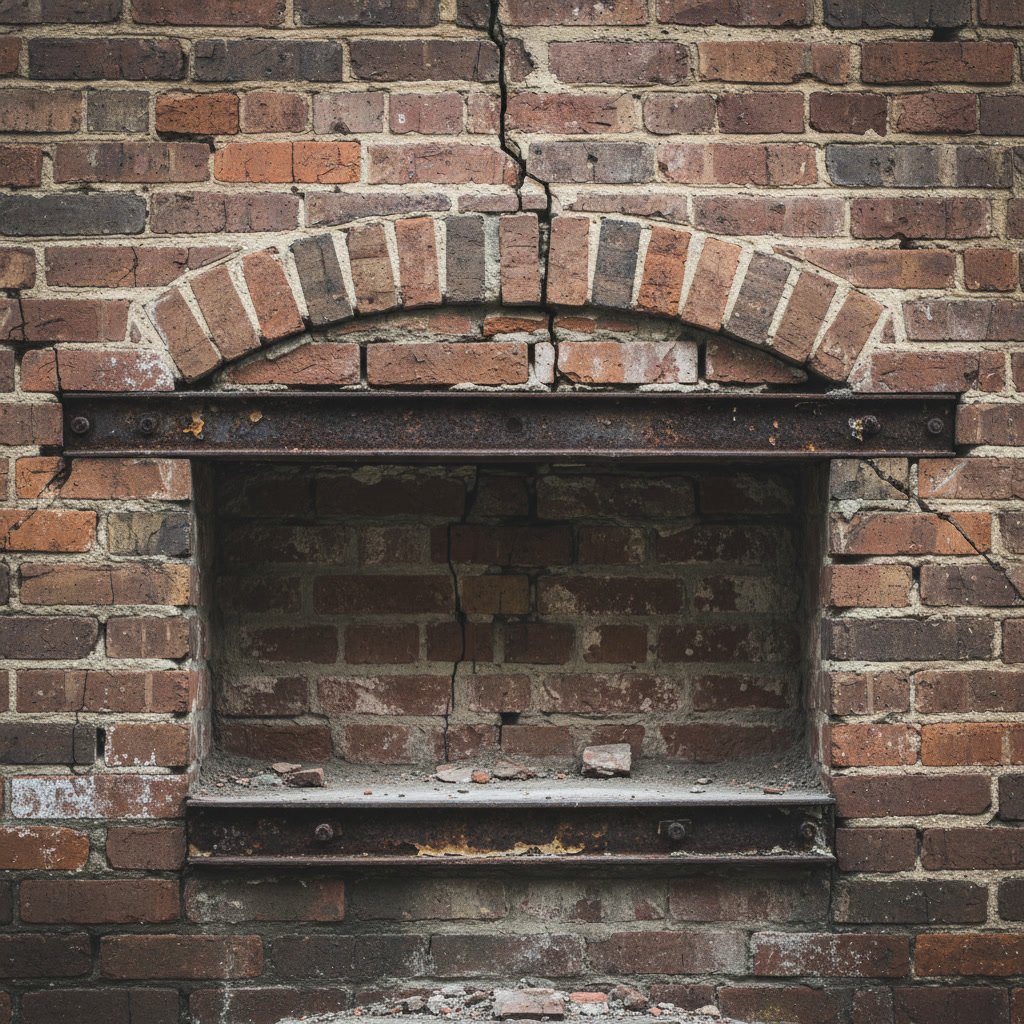
Brick veneer cannot span long horizontal distances without support, so steel shelf angles are installed at each floor level in multi-story construction to carry the veneer’s weight. These angles are the most common failure points in veneer systems because they’re exposed to moisture from above and below, leading to rust expansion that cracks surrounding bricks and mortar.
Restoring veneer around deteriorated shelf angles requires removing the damaged steel, treating the supporting structure, and installing new angles before rebuilding the veneer above. This work differs entirely from solid brick lintel replacement, where the lintel is embedded within the load-bearing wall and replacement requires extensive temporary shoring. Professional veneer restoration identifies shelf angle problems early, before rust expansion causes widespread cracking that multiplies repair costs.
Common Mistakes That Damage Each Wall Type
The most damaging error in solid brick restoration involves grinding mortar joints too deeply or using power tools that vibrate and crack adjacent bricks. Proper tuckpointing on solid walls requires hand tools or carefully controlled grinders that remove mortar to a depth of two to two-and-a-half times the joint width without undercutting the brick edges. Deeper cuts or undercuts remove the mechanical bond that holds the wall together.
For veneer, the most common mistake involves ignoring the tie system and treating the work as purely cosmetic. Contractors unfamiliar with veneer construction may replace bricks without verifying tie integrity or adding ties where originals have failed. Within a few years, the veneer pulls away from the backing, requiring far more extensive repairs than the original problem demanded. Another frequent error involves filling or covering weep holes during repointing, blocking the drainage that prevents frame rot and tie corrosion.
When Professional Assessment Becomes Non-Negotiable
Both wall types can hide serious problems behind surface symptoms, but solid brick walls present higher stakes because structural failure risks injury or collapse. Any solid brick wall showing horizontal cracks, outward bowing, or step cracks that follow mortar joints requires professional structural assessment before restoration begins. These patterns often indicate foundation settlement, lintel failure, or loss of internal structural integrity that cosmetic repairs cannot address.
Brick veneer showing bulging sections, widespread tie corrosion visible at open joints, or extensive deterioration patterns near shelf angles also demands thorough inspection. What appears as isolated damage often reflects systemic moisture intrusion or tie failure affecting large wall sections. Professional assessment identifies the full scope of necessary repairs and prevents partial fixes that waste money while leaving underlying problems to worsen.
Choosing the Right Restoration Approach for Your Home
Understanding whether you have brick veneer or solid brick construction shapes every aspect of restoration planning, from contractor selection to project timeline and budget. Veneer work prioritizes tie integrity, moisture management, and proper attachment to the backing, while solid brick restoration focuses on structural continuity, load transfer, and mortar compatibility with historic materials. Neither approach works for the other wall type, and contractors experienced in one system may lack the specialized knowledge required for the other.
Homeowners benefit most from working with masonry professionals who can identify wall type, explain the specific restoration techniques required, and demonstrate experience with projects similar to yours. The right approach preserves your home’s structural integrity, prevents recurring problems, and maintains the appearance that brick construction provides.
Massey Tuckpointing & Masonry has restored both brick veneer and solid brick structures throughout the St. Louis area since 2002, bringing three generations of masonry expertise to every project. Whether your home requires veneer tie replacement or historic solid brick conservation, our team understands the distinct techniques each wall type demands. Call +13142009488 to schedule an assessment and receive a detailed explanation of the restoration approach your specific brick construction requires.