Brick exteriors deteriorate slowly, giving homeowners a window to catch problems before they escalate into structural issues. Recognizing the signs brick needs restoration early saves thousands in repair costs and protects your home’s value. Cracked mortar, water stains, and shifting bricks all signal that your masonry needs professional attention, and ignoring them allows moisture, freeze-thaw cycles, and structural stress to spread damage throughout your walls.
Why Brick Deterioration Happens Faster Than You Think
Brick itself can last centuries, but the mortar holding it together begins to break down much sooner. Most mortar joints start showing wear after 20 to 30 years, depending on exposure and climate. St. Louis weather accelerates this process with freeze-thaw cycles that expand and contract masonry materials dozens of times each winter.
Water is the primary culprit. When mortar cracks or erodes, water seeps behind the brick face. During winter, that water freezes, expands, and pushes bricks outward. Over time, this creates gaps, spalling, and even full wall sections that bow or lean. What starts as a hairline crack can become a structural liability within just a few seasons if left unaddressed.
How Mortar Reveals the First Warning Signs
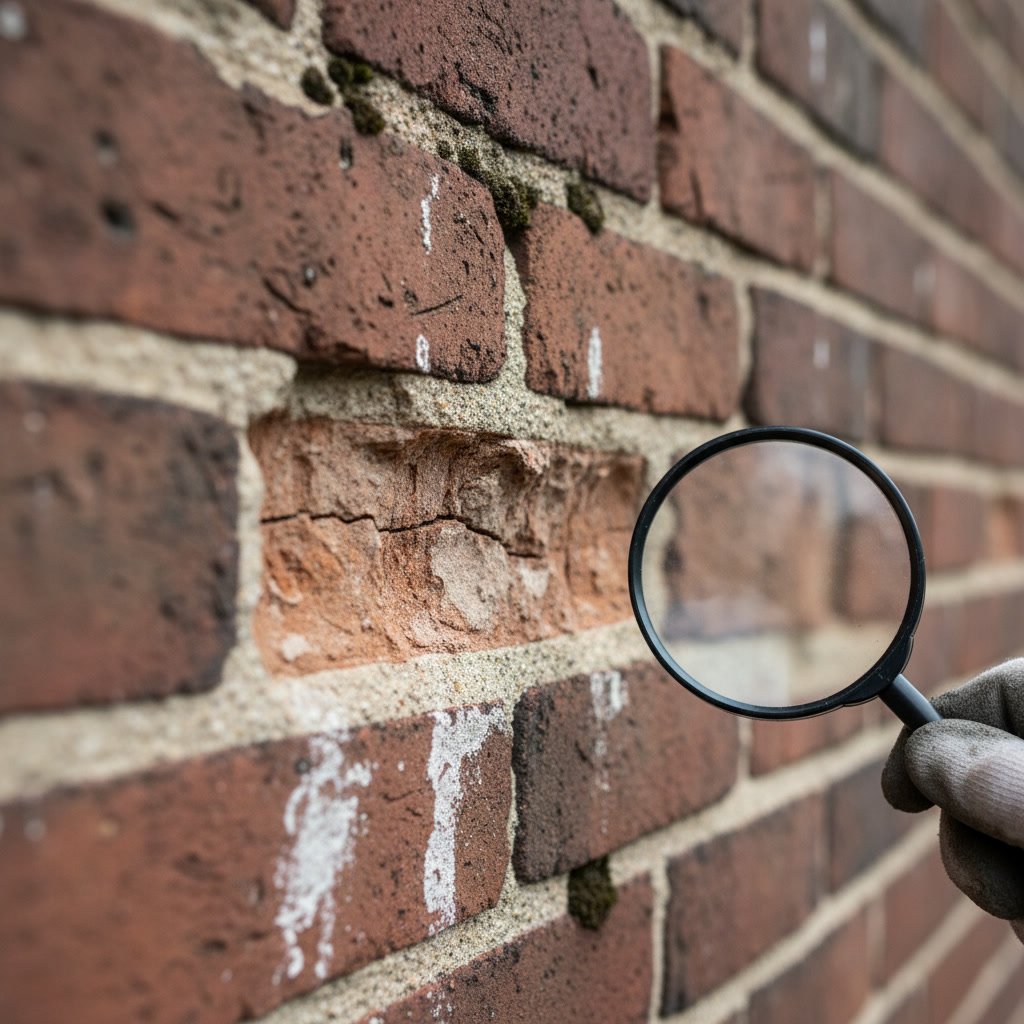
Mortar joints are your early warning system. When you see crumbling, recessed, or powdery mortar between bricks, the material has begun to fail. Healthy mortar should sit flush or slightly recessed from the brick face, forming a solid, continuous seal.
If you can easily scrape mortar out with a screwdriver or your finger, the bond has weakened past the point of effectiveness. This condition, often called erosion or weathering, allows water penetration and sets the stage for more serious damage. Scheduling tuckpointing at this stage prevents the need for full wall reconstruction later.
When Cracks in Bricks Signal Bigger Problems
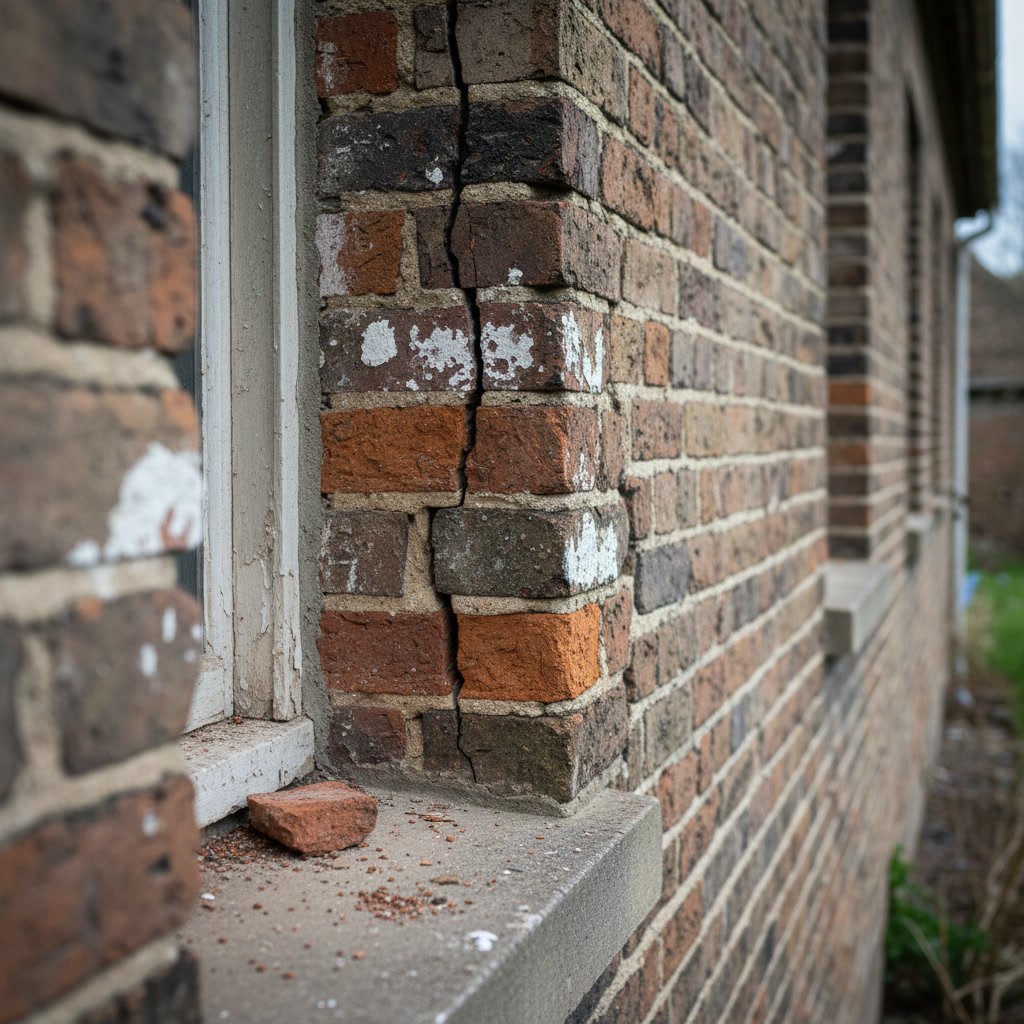
Vertical or horizontal cracks running through individual bricks, not just mortar, indicate stress beyond normal wear. Settlement cracks appear when foundations shift or soil beneath the structure moves. Thermal stress cracks form when masonry expands and contracts without proper expansion joints.
Stair-step cracks that follow mortar lines often point to foundation movement or drainage issues. Diagonal cracks cutting through bricks suggest concentrated stress at weak points. Any crack wider than one-eighth of an inch warrants immediate inspection, as it likely signals underlying structural issues that won’t resolve on their own.
White Staining and What It Tells You
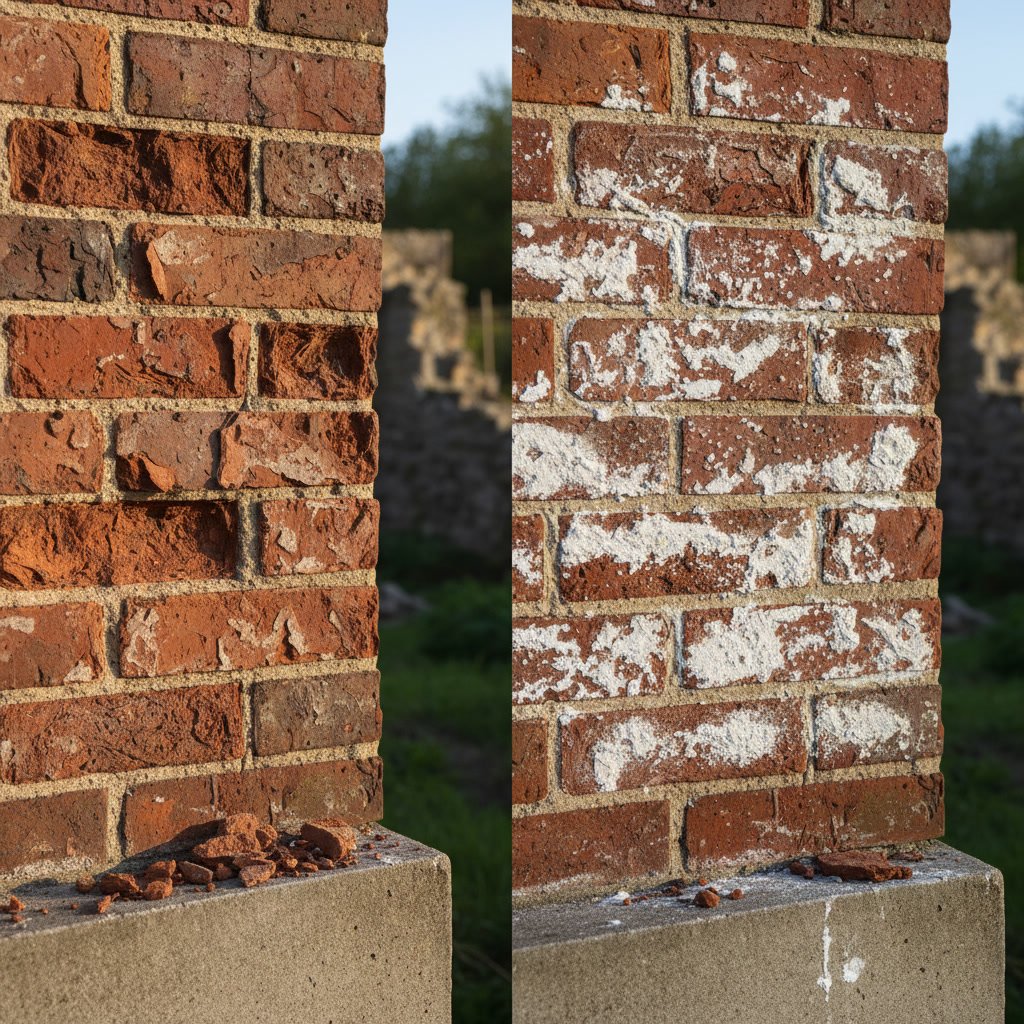
Efflorescence, the white powdery residue that appears on brick surfaces, forms when water carries salts from inside the masonry to the exterior. As the water evaporates, it leaves the salts behind. While efflorescence itself doesn’t damage brick, it confirms that water is moving through your walls.
Persistent efflorescence means water is entering and exiting the masonry regularly, which accelerates mortar deterioration and freeze-thaw damage. If you see white staining season after season, the waterproofing has failed and moisture is cycling through your walls. Professional brick restoration addresses both the water intrusion and the damaged mortar that allowed it.
Bulging or Bowing Walls Demand Immediate Action in Affton
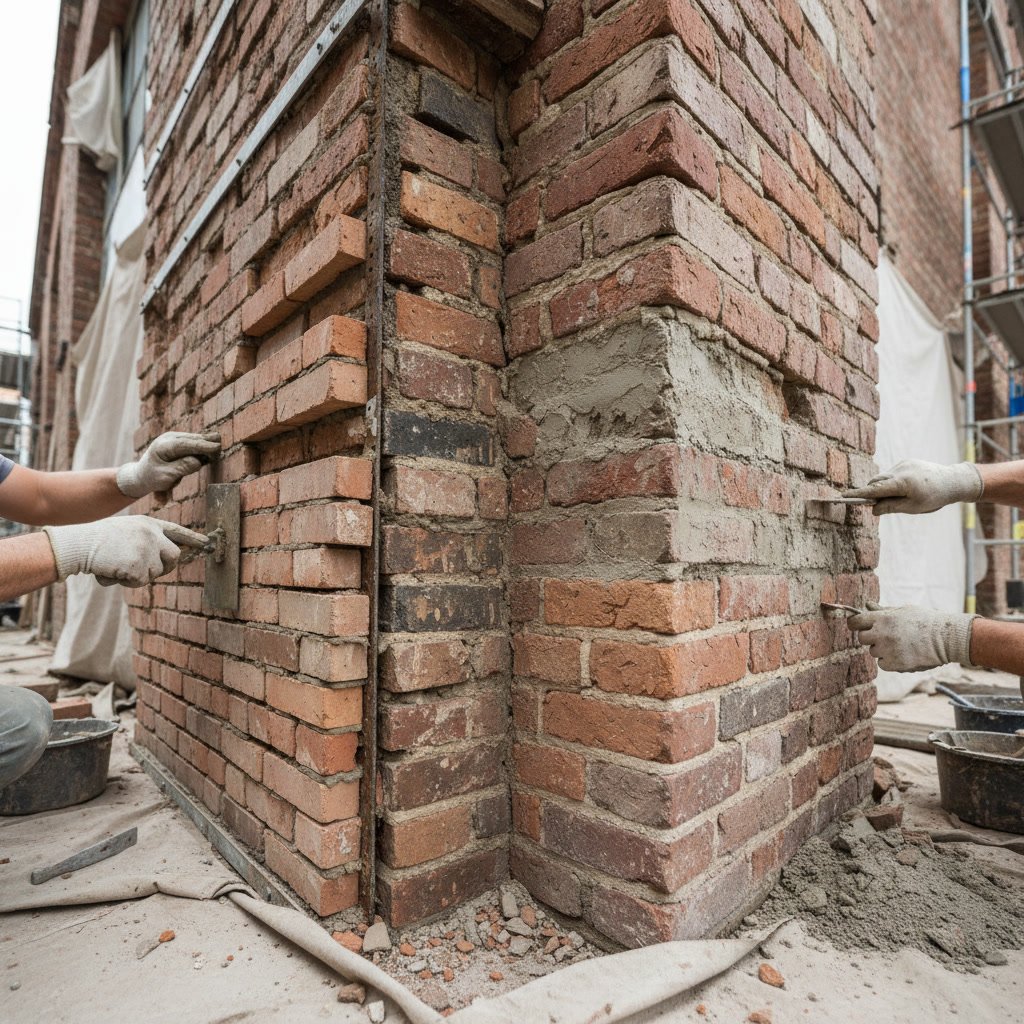
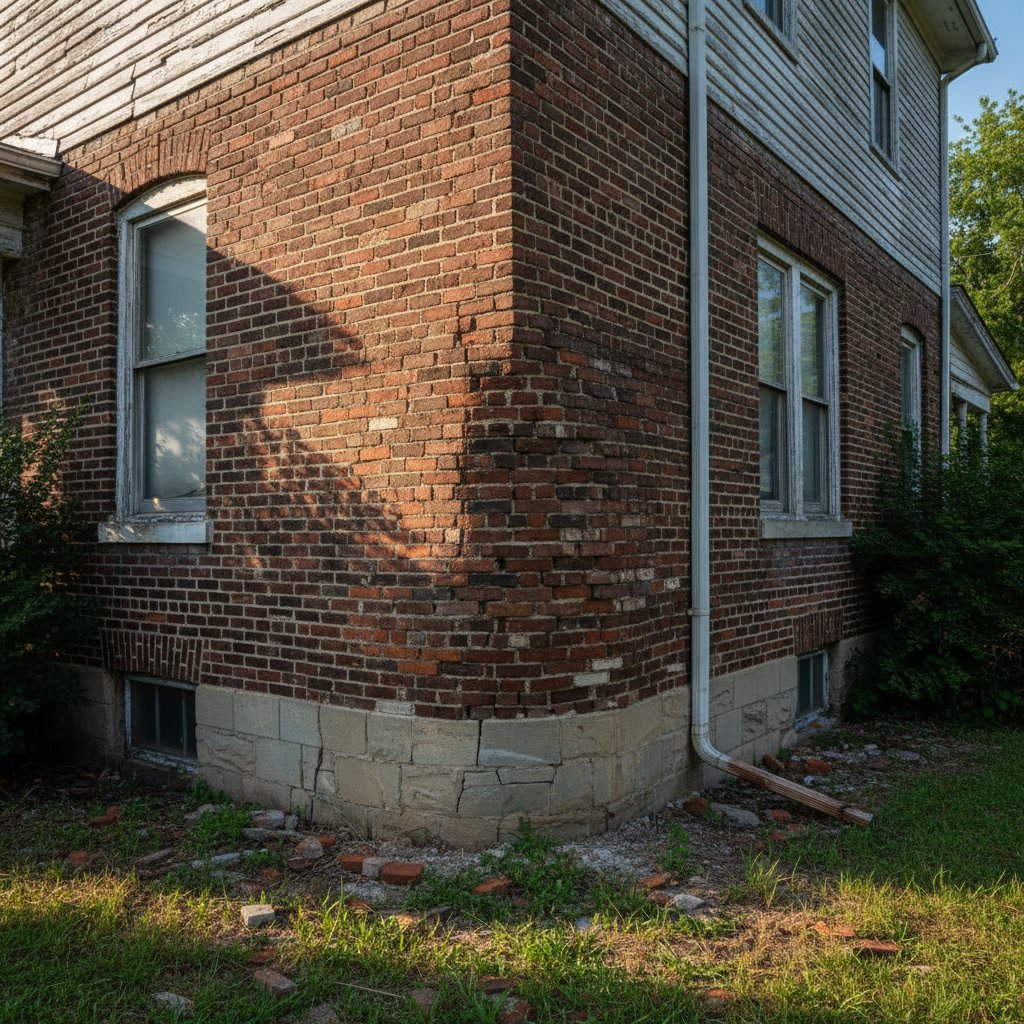
When brick walls bulge outward or bow away from the structure, the situation has moved beyond cosmetic repair. This happens when water infiltration, rusted wall ties, or foundation movement pushes the brick veneer away from the backing. A bulge of even half an inch over an eight-foot span indicates serious structural concern.
In the Affton area, older homes built before modern moisture barriers often develop this issue as wall ties corrode and lose their grip. Once a wall begins to bow, gravity and weather will continue pulling it away from the building. Rebuilding the affected section with new ties and proper flashing is the only safe remedy. Homeowners across St. Louis County face this issue in mid-century brick homes where original construction methods didn’t account for long-term moisture management.
Five Physical Signs You Can Check From Ground Level
Walk around your home and look for these specific indicators:
- Loose or missing bricks that have fallen or can be wiggled by hand
- Mortar that’s recessed more than half an inch behind the brick face
- Dark staining or discoloration around windows, doors, or rooflines where water runs off
- Bricks with flaking or peeling faces, a condition called spalling
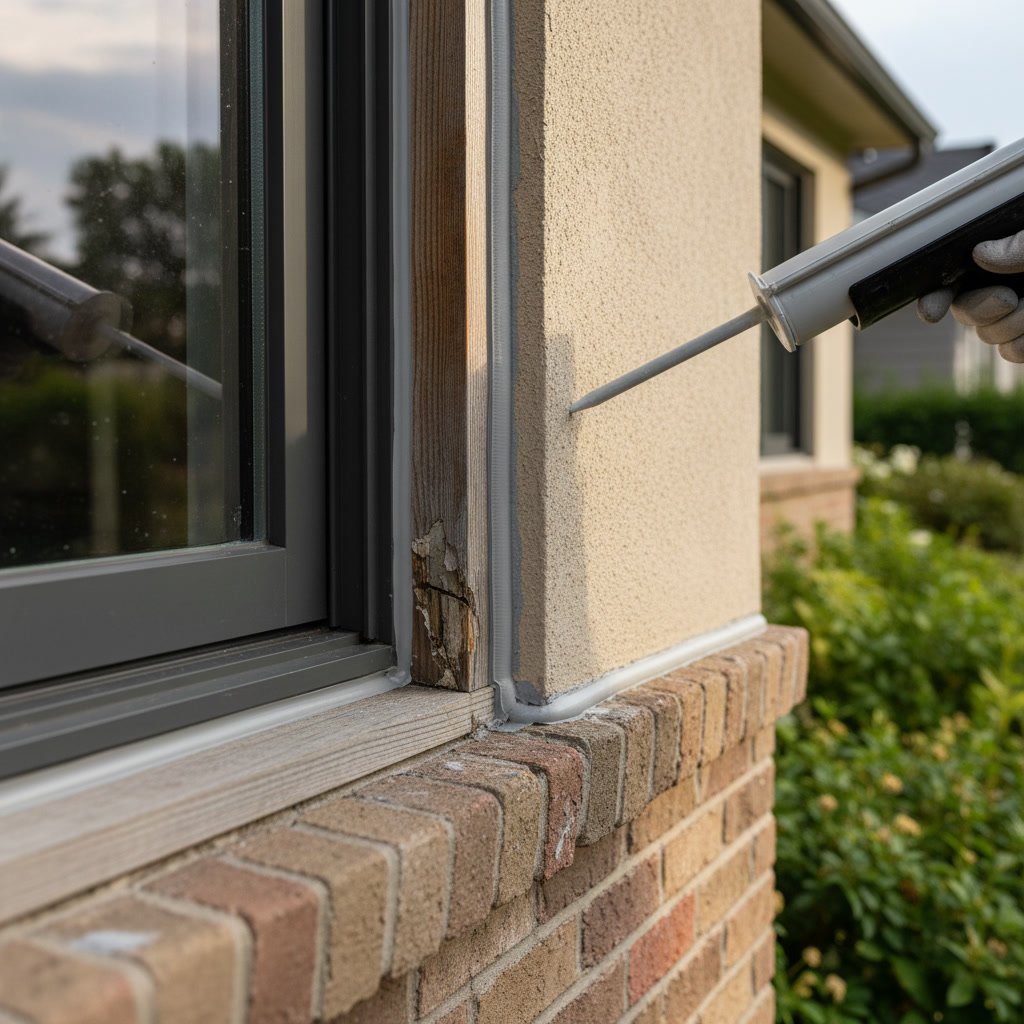
- Gaps between bricks and window or door frames that weren’t there before
Each of these visible signs points to active deterioration. Spalling, in particular, accelerates quickly once it starts because each freeze-thaw cycle peels away another layer of the brick face. Understanding the difference between tuckpointing and repointing helps you communicate the scope of work when you call for an estimate.
Indoor Clues That Point to Exterior Masonry Failure
Sometimes the first warning signs appear inside your home. Water stains on interior walls adjacent to exterior brick often mean moisture has breached the outer shell. Peeling paint or wallpaper near outside walls suggests high humidity or direct water infiltration.
Musty odors in rooms with exterior brick walls can indicate hidden moisture problems. If you notice a temperature difference near exterior walls, the insulation may be wet or the masonry envelope may be compromised. These indoor symptoms warrant an exterior inspection, as they typically appear only after exterior damage has progressed significantly.
How Chimneys Show Distress Differently
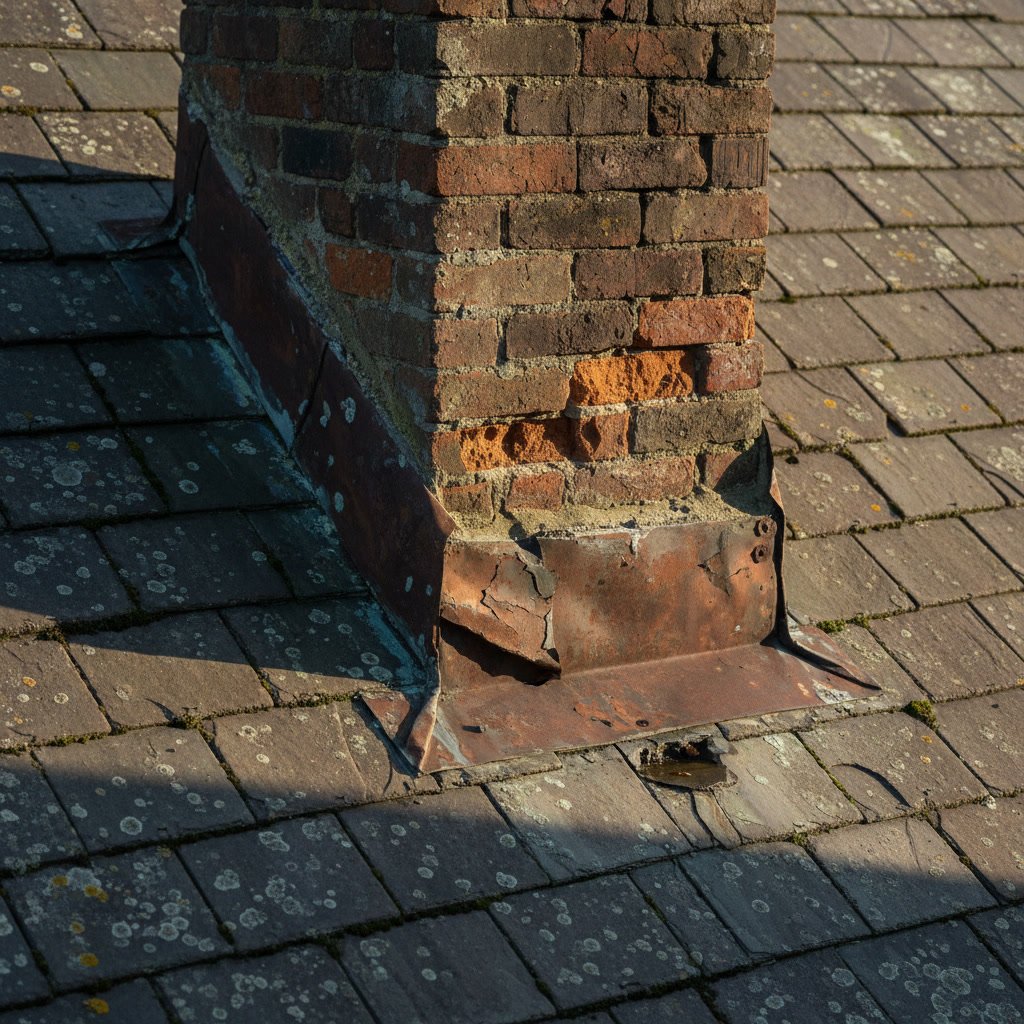
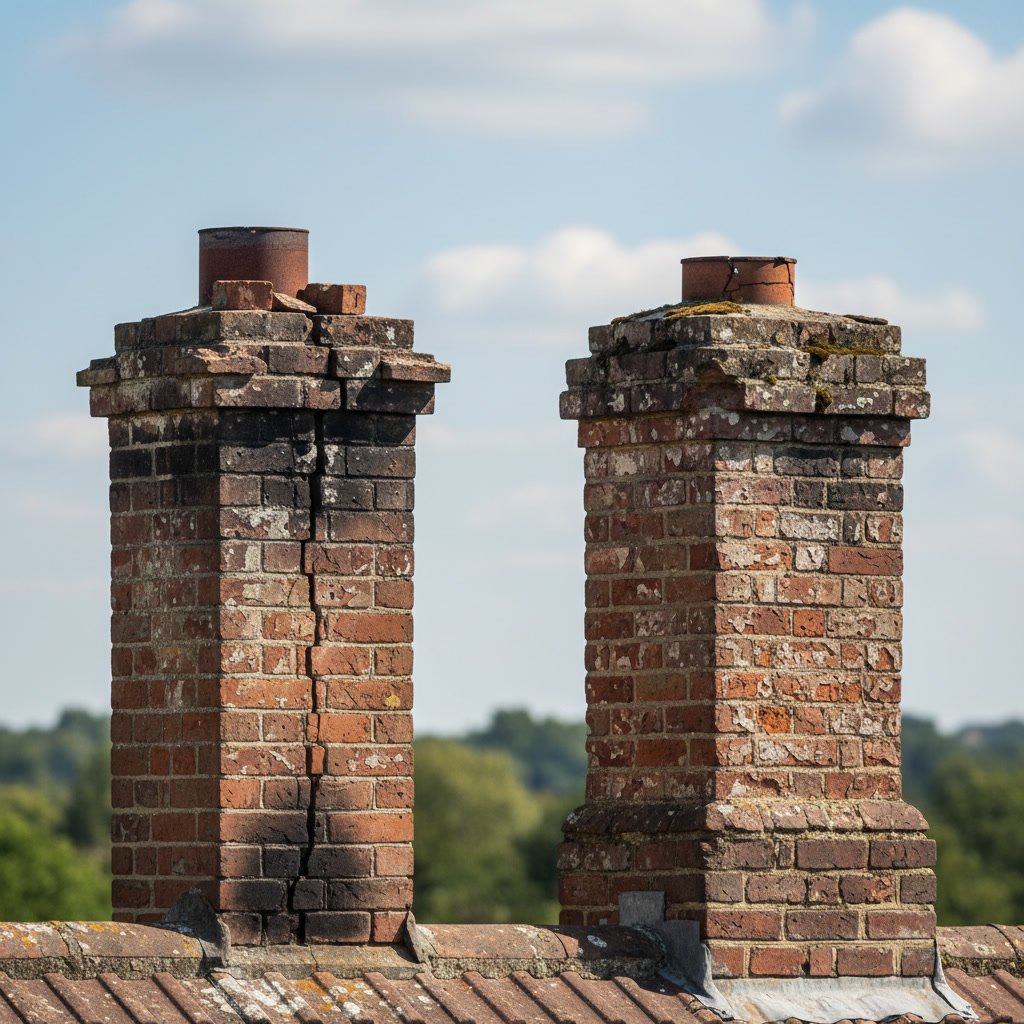
Chimneys face unique stresses. They stand exposed on all four sides, endure extreme temperature swings from fireplace use, and collect water from rain and snow. Leaning chimneys, cracked crowns, and missing mortar appear faster on chimneys than on walls.
White staining near the roofline where the chimney meets the roof often signals failed flashing. Bricks that have shifted out of plumb indicate foundation settling or deteriorated mortar. Since chimney repairs involve both masonry and roofing interfaces, they require specialized skills. Homeowners dealing with chimney issues can learn more about when repair makes sense versus full replacement to make informed decisions.
The Cost of Waiting Versus Acting Early
Repointing 100 square feet of wall costs a fraction of what you’ll pay to rebuild that same section after water damage destroys the brick and underlying structure. Early intervention, when only mortar needs replacement, typically runs between 8 and 15 dollars per square foot. Rebuilding a wall section after bricks have spalled and ties have rusted can cost three to five times that amount.
More importantly, structural repairs often require permits, engineering assessments, and temporary bracing, all of which add time and expense. Catching deterioration at the mortar stage keeps the project straightforward and the costs predictable. Professional masonry restoration addresses problems before they compound into emergencies.
What Professional Inspection Reveals
Trained masons spot problems that homeowners miss. They know where water typically enters, which wall sections bear the most stress, and how to distinguish cosmetic wear from structural concern. A thorough inspection includes checking mortar hardness with tools, measuring wall plumb and alignment, and probing for hidden deterioration.
Professionals also identify contributing factors like clogged gutters, missing flashing, or poor grading that accelerate brick damage. Addressing these root causes during restoration prevents the same problems from returning. An inspection from Massey Tuckpointing & Masonry provides a detailed assessment and a clear action plan, so you know exactly what your home needs and why.
Protecting Your Investment Before It’s Too Late
Brick restoration preserves your home’s curb appeal, structural integrity, and market value. Once you spot crumbling mortar, cracks, staining, or any of the warning signs covered here, scheduling an inspection is the smartest next step. Homes throughout Webster Groves and surrounding areas face the same weather challenges, and the ones that age gracefully are the ones where owners addressed small problems promptly.
The difference between a manageable repair and a major reconstruction often comes down to timing. Brick damage doesn’t pause or reverse, it only spreads. Taking action when you first notice the signs keeps your home safe, dry, and beautiful for decades to come.
Massey Tuckpointing & Masonry has served the Greater St. Louis area since 2002, providing expert masonry and restoration services to homeowners who want lasting results. If you’ve noticed any of the warning signs discussed here, reach out for a professional assessment. Call +13142009488 to schedule your inspection and protect your home before minor issues become major expenses.