Brick walkway deterioration begins with the mortar joints, not the brick itself. When these joints crack, crumble, or wash away, the entire structure loses stability, allowing pavers to shift, sink, or separate. Recognizing the early warning signs that your walkway joints need repointing prevents minor maintenance from escalating into complete walkway reconstruction. Most homeowners can catch these problems with a simple visual inspection and a few minutes of observation after rain.
The mortar binding your walkway pavers together typically lasts 20 to 30 years under normal conditions, but freeze-thaw cycles, poor drainage, and inadequate original installation can shorten that lifespan dramatically. Understanding what to look for helps you schedule repairs before structural problems develop.
Why Walkway Joint Deterioration Happens Faster Than Wall Joints
Horizontal surfaces face different stress loads than vertical walls. Walkway joints endure constant foot traffic, furniture movement, water pooling, and the full weight of everything placed on the surface. Gravity pulls water directly into horizontal joints, where it sits longer and penetrates deeper than on vertical surfaces.
Freeze-thaw damage accelerates on walkways because trapped water has nowhere to drain. When temperatures drop below freezing, that water expands by roughly 9%, creating pressure that fractures mortar from the inside out. A single winter can produce 30 to 40 freeze-thaw cycles in the St. Louis region, each one widening existing cracks.
Visible Cracks and Gaps Between Pavers
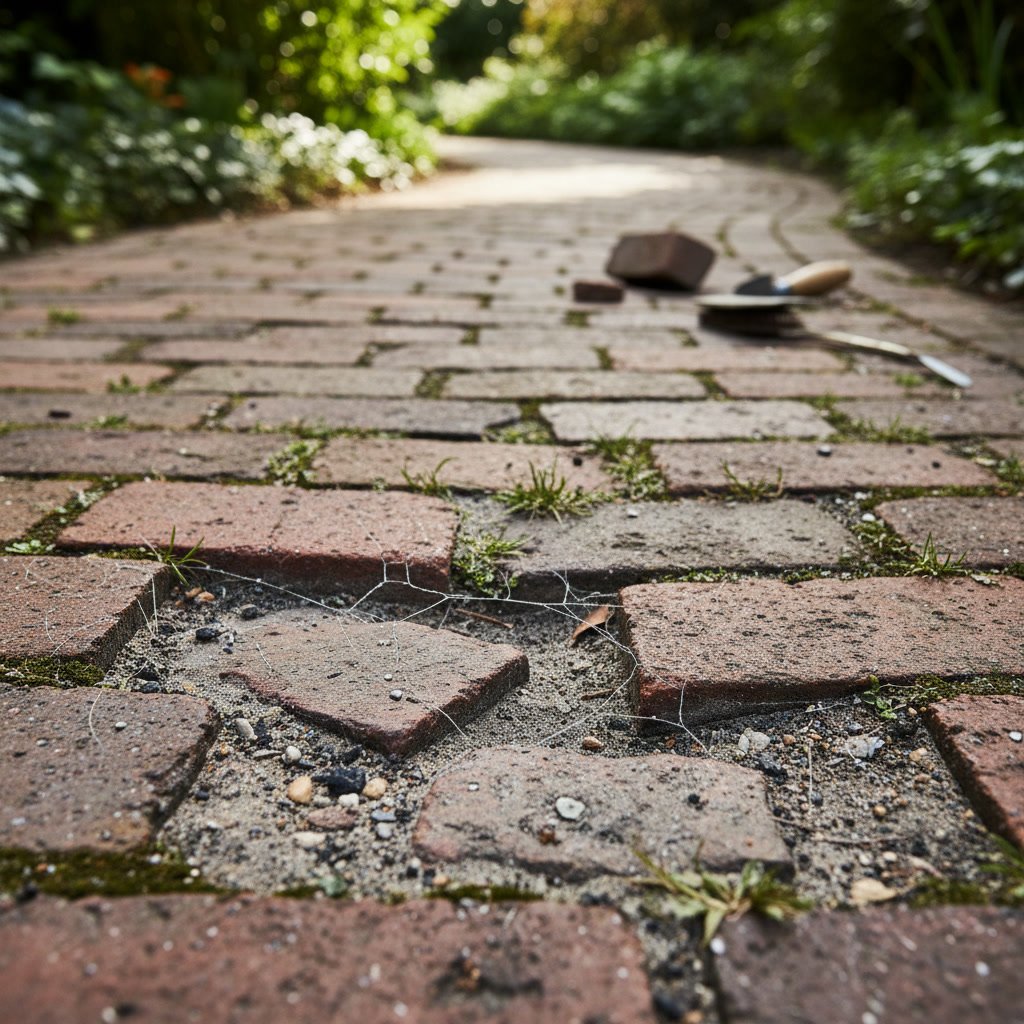
The most obvious sign appears as hairline cracks running through mortar joints. These cracks start small, often less than one-sixteenth of an inch wide, but expand rapidly once water infiltration begins. When you notice cracks wider than one-eighth of an inch, or gaps where you can see down to the base material below, the structural integrity is already compromised.
Gaps between pavers create entry points for weeds, insects, and water. Once water reaches the sand or gravel base beneath your walkway, it erodes that foundation material, creating voids that allow pavers to sink unevenly. This is the same deterioration pattern we address in masonry restoration projects throughout the region.
Loose or Wobbly Pavers That Rock When Stepped On
Step on different sections of your walkway and pay attention to movement. Pavers that rock, shift, or feel unstable indicate that the mortar beneath and around them has failed. This instability creates uneven load distribution, accelerating wear on adjacent pavers and joints.
Loose pavers pose immediate safety hazards. Trip-and-fall accidents occur frequently on walkways with unstable surfaces, particularly for children, elderly family members, and visitors unfamiliar with the terrain. Insurance liability concerns make this more than just a cosmetic issue.
Water Pooling on the Surface After Rain
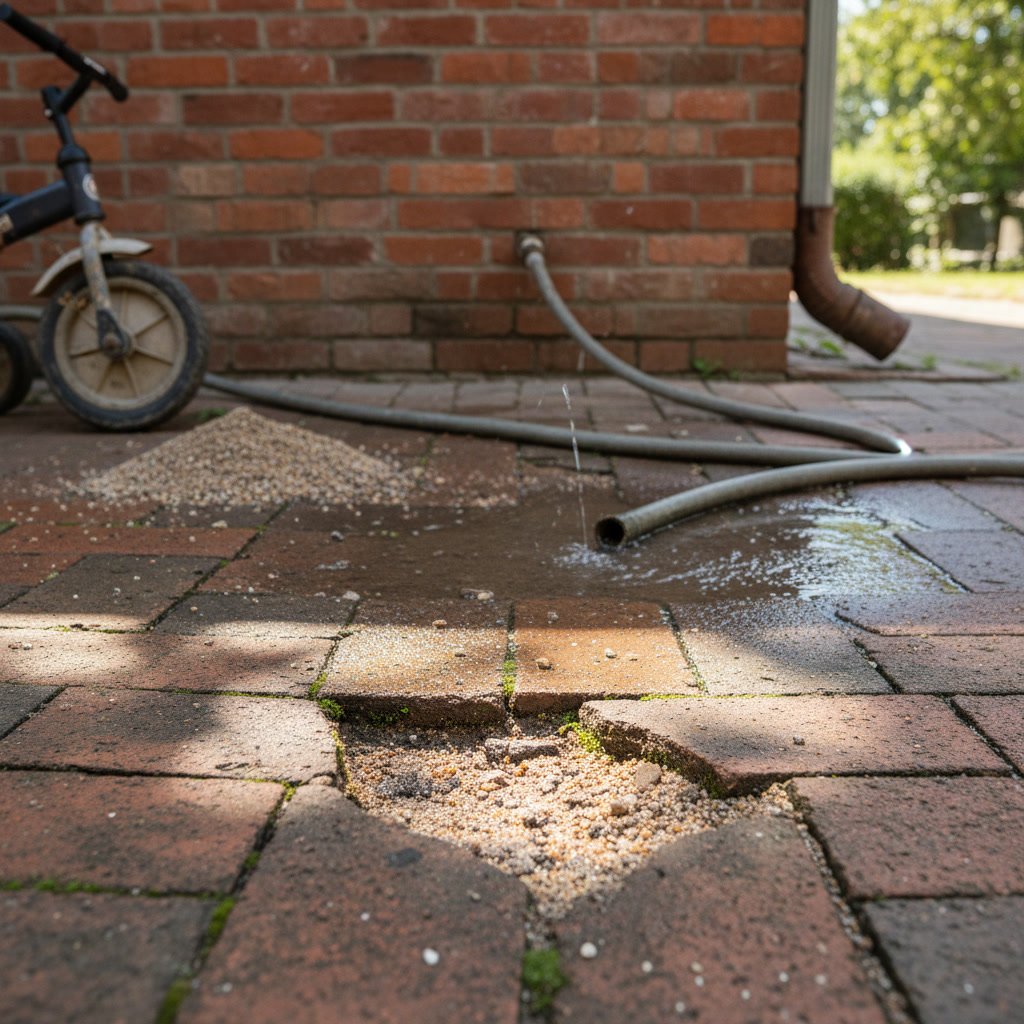
Properly constructed walkways slope slightly to direct water away from the surface. When you see puddles remaining on your walkway 30 minutes or more after rain stops, either the base has settled or the pavers have sunk unevenly. Both problems trace back to compromised mortar joints that allowed water penetration and base erosion.
Standing water accelerates every form of deterioration. It keeps mortar saturated, increasing freeze-thaw damage. It promotes algae and moss growth, which further breaks down mortar. And it signals that the drainage designed into your original installation has failed.
Comparing Repointing Walkways vs Walls in Affton Homes
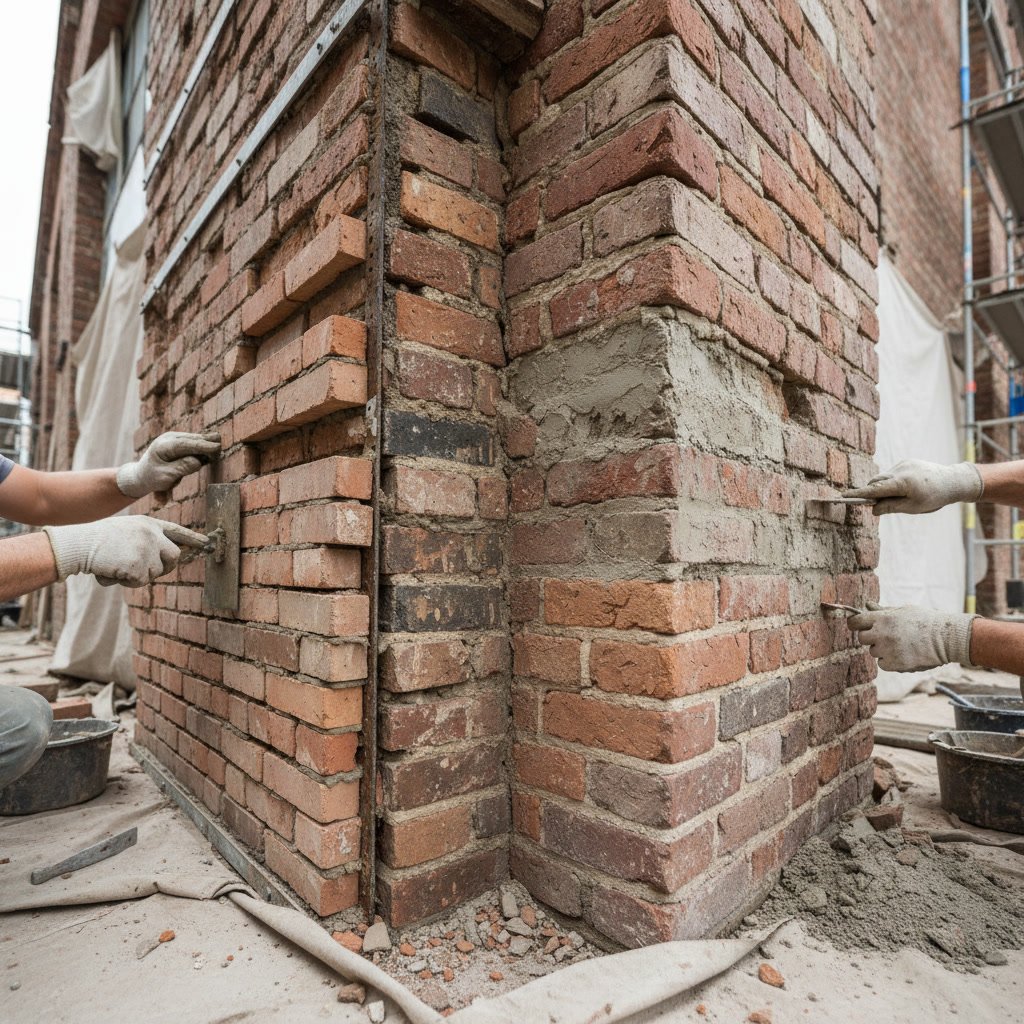
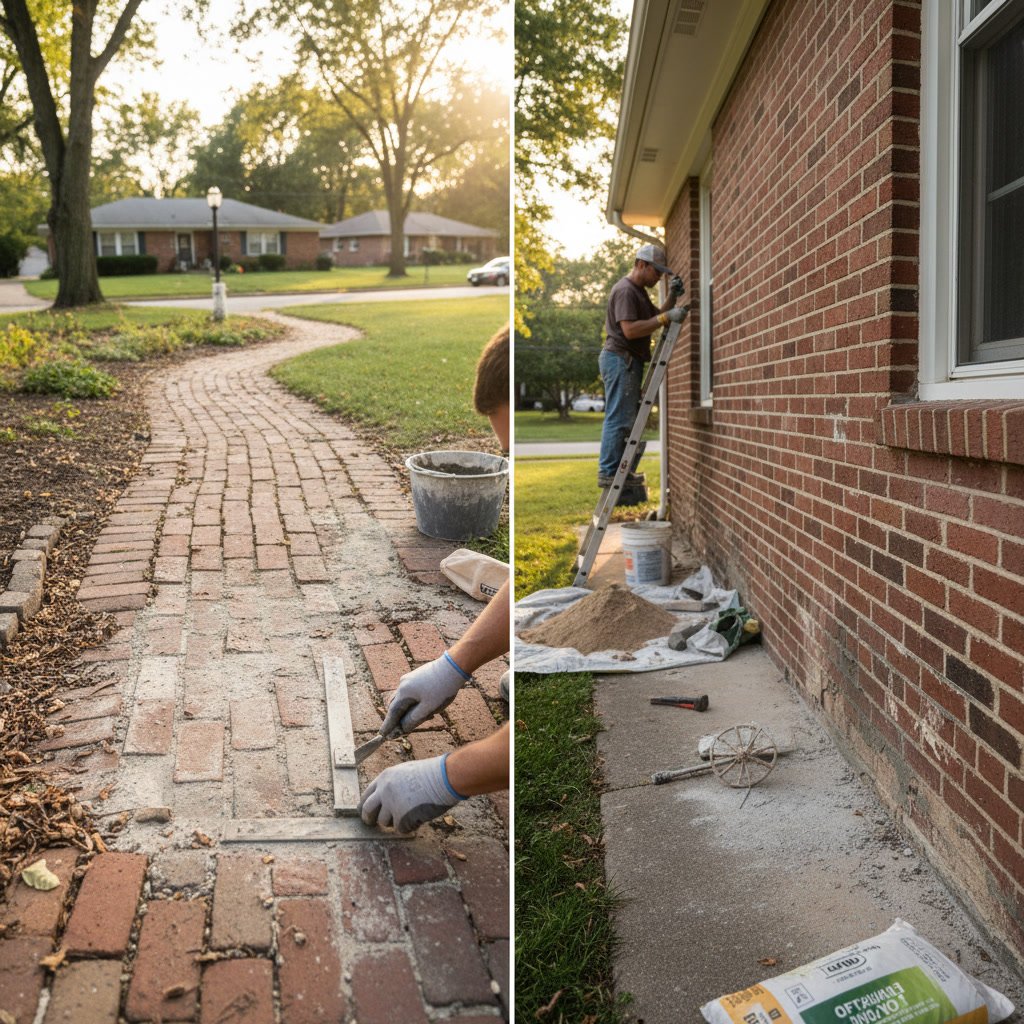
Walkway repointing requires different materials and techniques than wall repointing. Vertical tuckpointing uses mortar that needs to match the compressive strength of the surrounding brick. Walkway joints need mortar that withstands compression loads plus lateral movement from traffic.
The mortar mix for walkways typically includes higher Portland cement content and lower lime content than wall mortar. This creates a harder, more durable joint that resists abrasion. However, if the mix is too hard, it won’t allow the slight flexing that prevents cracking when pavers expand and contract with temperature changes. Professional masons balance these competing requirements based on your specific paver type, climate exposure, and traffic patterns.
Depth requirements also differ. Wall joints may be repointed to depths of three-quarters of an inch to one inch. Walkway joints often require full-depth removal and replacement, sometimes two inches or more, to ensure the new mortar bonds properly and supports the load from above.
Crumbling or Powdering Mortar That Brushes Away
Run your finger or a screwdriver tip along a mortar joint. If the material crumbles, flakes, or brushes away as powder, the binder has broken down. This condition, sometimes called sugaring, means the mortar has lost structural capacity and provides no support to the pavers.
Mortar deterioration often happens unevenly across a walkway. Sections with more sun exposure may remain intact while shaded areas, where moisture lingers longer, crumble first. South-facing walkways experience more freeze-thaw cycles than north-facing sections, creating different deterioration patterns even on the same property.
Sections of Walkway Sitting Lower Than Adjacent Areas
Measure the height difference between suspected sunken areas and the surrounding walkway surface. Differences of more than one-quarter inch indicate base settlement. This happens when water washes away the sand or gravel supporting the pavers, creating voids that allow the surface to drop.
Sunken sections trap more water, which accelerates erosion, creating a self-reinforcing cycle of deterioration. The longer you wait to address settling, the larger the repair area becomes and the more extensive the base reconstruction required. Similar principles apply to driveway and walkway sealing, where preventing water penetration stops damage before it starts.
White Staining or Discoloration on Brick Surfaces
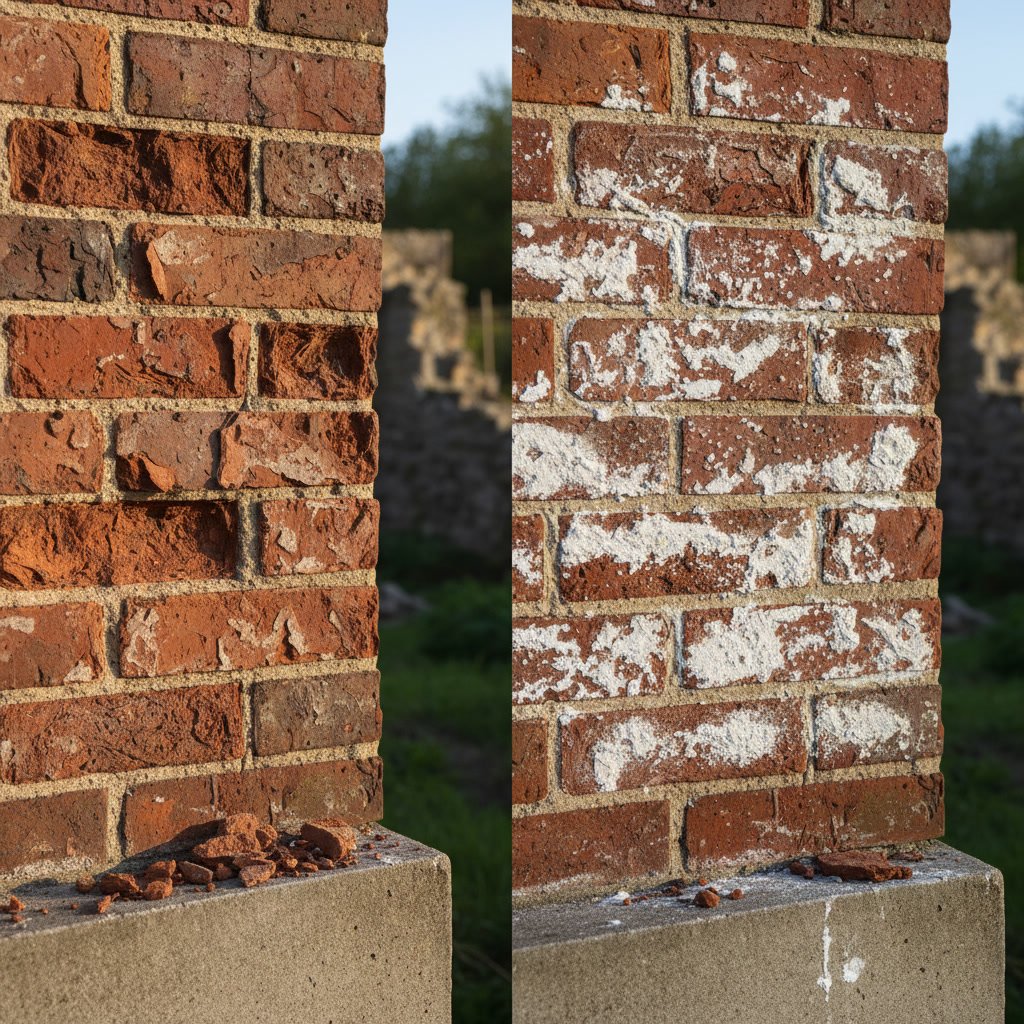
White, chalky deposits on brick surfaces signal efflorescence, where water-soluble salts migrate through the material and crystallize on the surface. While efflorescence itself doesn’t damage brick, its presence proves that water is moving through your walkway in ways it shouldn’t. That water movement undermines mortar joints and erodes base materials.
Persistent efflorescence that returns shortly after cleaning indicates ongoing moisture problems. You may see this paired with the differences between spalling and efflorescence that help diagnose whether the brick itself is damaged or only the mortar requires attention.
Weeds and Vegetation Growing Between Pavers
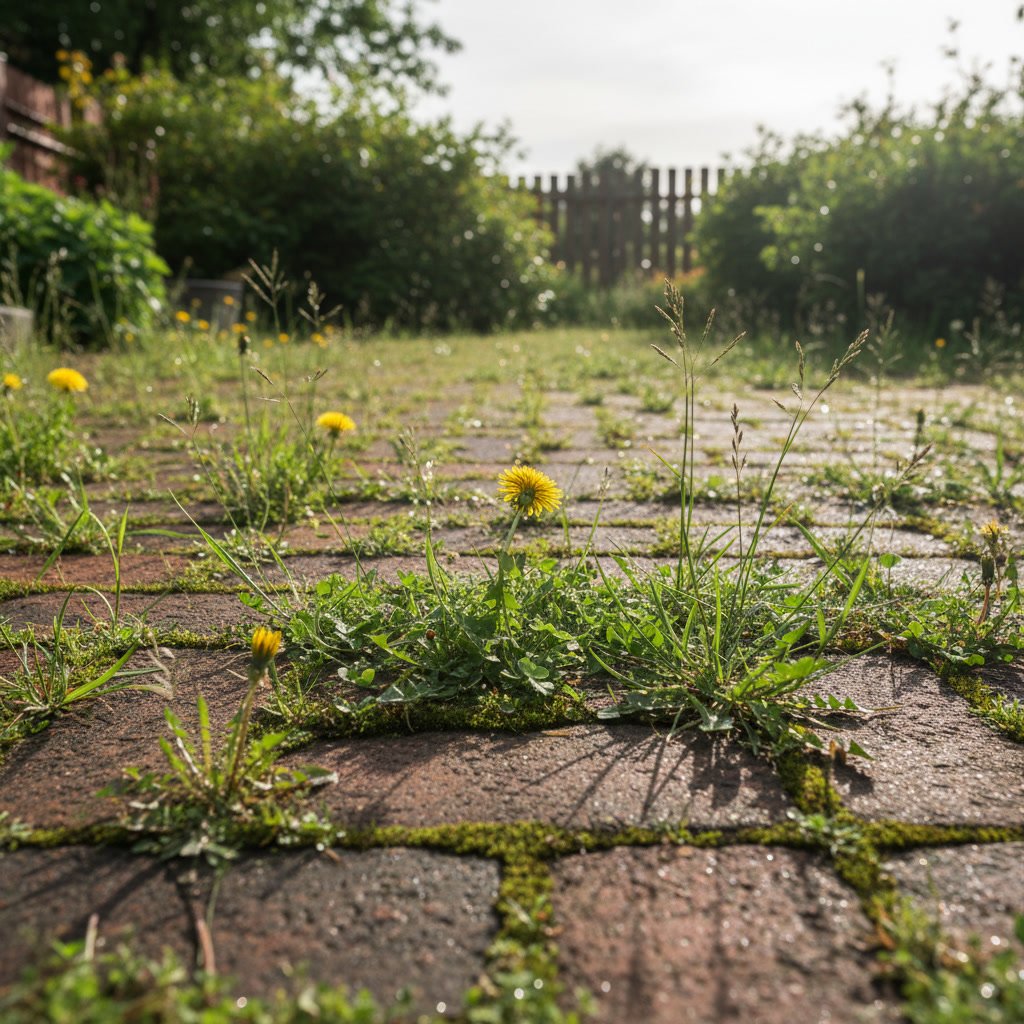
Plant growth in mortar joints means two things: the mortar has deteriorated enough to allow soil accumulation, and water is present frequently enough to support growth. Weed roots exert surprising force as they expand, widening existing cracks and accelerating joint failure.
Some homeowners treat this as purely aesthetic, but vegetation indicates structural problems. The organic matter and root systems retain moisture against the mortar, keeping it wet through more freeze-thaw cycles and speeding deterioration. Removing weeds without repointing only addresses the symptom, not the underlying joint failure.
Step-by-Step Visual Inspection You Can Perform Today
Walk the entire length of your brick walkway and document problem areas. Start by photographing sections with visible cracks, gaps, or loose pavers. These photos help you track progression if you’re not ready to schedule repairs immediately.
Test mortar hardness by pressing a screwdriver or awl into joints at multiple points. Sound mortar resists penetration. Deteriorated mortar allows the tool to sink in easily or crumble away. Mark problem areas with spray paint or chalk so you can reference them when discussing repairs with contractors.
Check for movement by stepping on suspected loose pavers and feeling for rocking or shifting. Note whether adjacent pavers also move, which indicates more widespread base problems. Look at the walkway from a low angle to spot uneven surfaces and settlement that aren’t obvious from standing height.
Finally, observe water behavior during or immediately after rain. Where does water collect? How long does it take to drain? Does water flow toward your foundation or pool in specific areas? These observations guide both repair planning and any drainage corrections needed during repointing.
Protecting Your Investment Before Damage Spreads
Repointing costs increase exponentially once pavers begin sinking or the base requires reconstruction. A typical repointing project addresses only the mortar joints and maintains the existing base and pavers. Once structural shifting begins, repairs require excavation, base replacement, paver releveling, and then repointing, often tripling the project cost.
The window between early joint deterioration and structural damage typically spans two to four years in our climate. Catching problems during that window keeps repairs manageable and preserves the original walkway materials. Waiting until pavers shift often means the most damaged sections need complete rebuilding.
Weatherproofing treatments applied after repointing extend the life of new mortar joints by reducing water absorption. These treatments don’t replace proper repointing but do slow future deterioration when applied correctly to sound mortar.
When to Schedule Professional Repointing
The signs above rarely appear in isolation. Most walkways show multiple warning signals before reaching critical failure. If you’ve identified three or more of these conditions, scheduling an evaluation prevents emergency repairs during inconvenient times. Spring and fall offer the best weather conditions for repointing work, with moderate temperatures that allow proper mortar curing.
Massey Tuckpointing & Masonry has restored walkways throughout the St. Louis region since 2002, addressing everything from minor joint repairs to complete walkway reconstruction. Our family-owned approach means you work directly with experienced masons who understand how local climate conditions affect different masonry materials and can recommend solutions tailored to your specific situation.
If you’ve noticed any of these warning signs on your property, a quick inspection can determine whether simple repointing will solve the problem or if more extensive repairs are needed. Contact our team at +13142009488 to schedule an evaluation and protect your walkway before minor joint deterioration becomes a major reconstruction project.