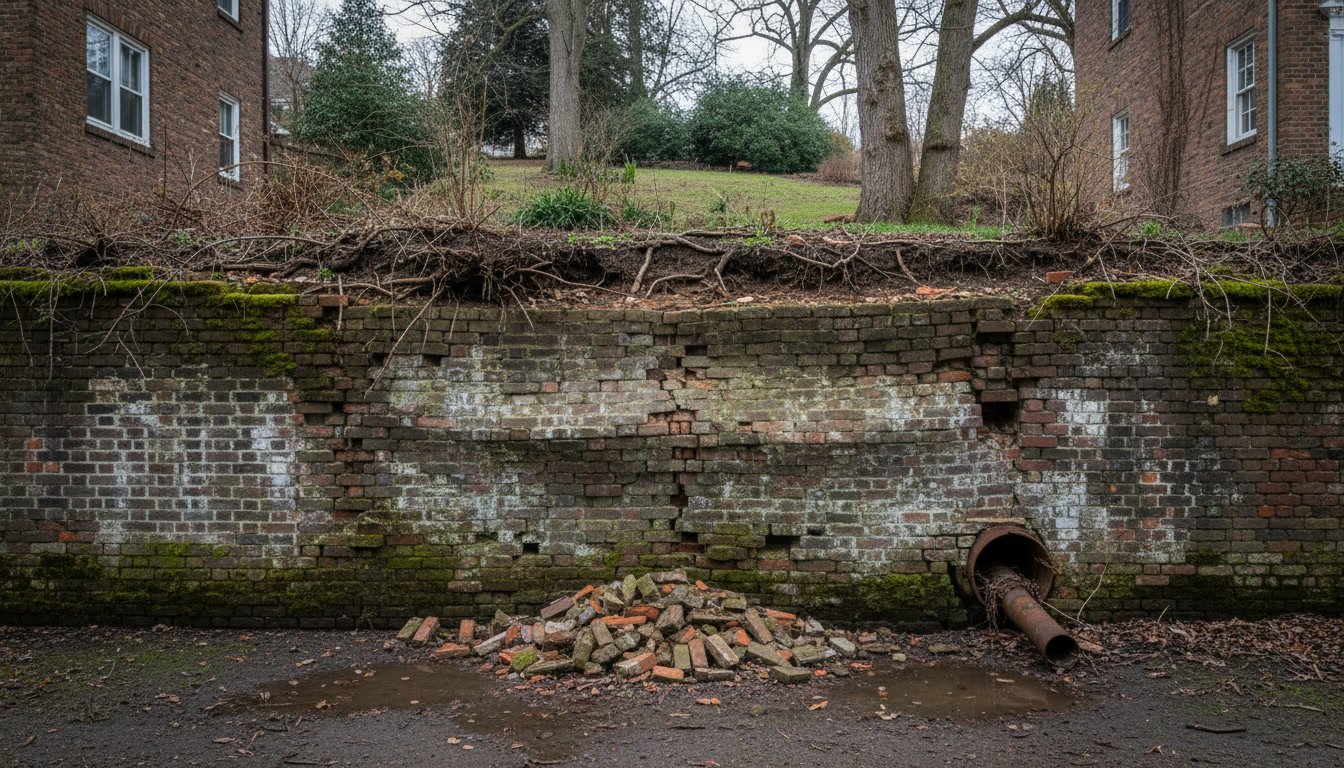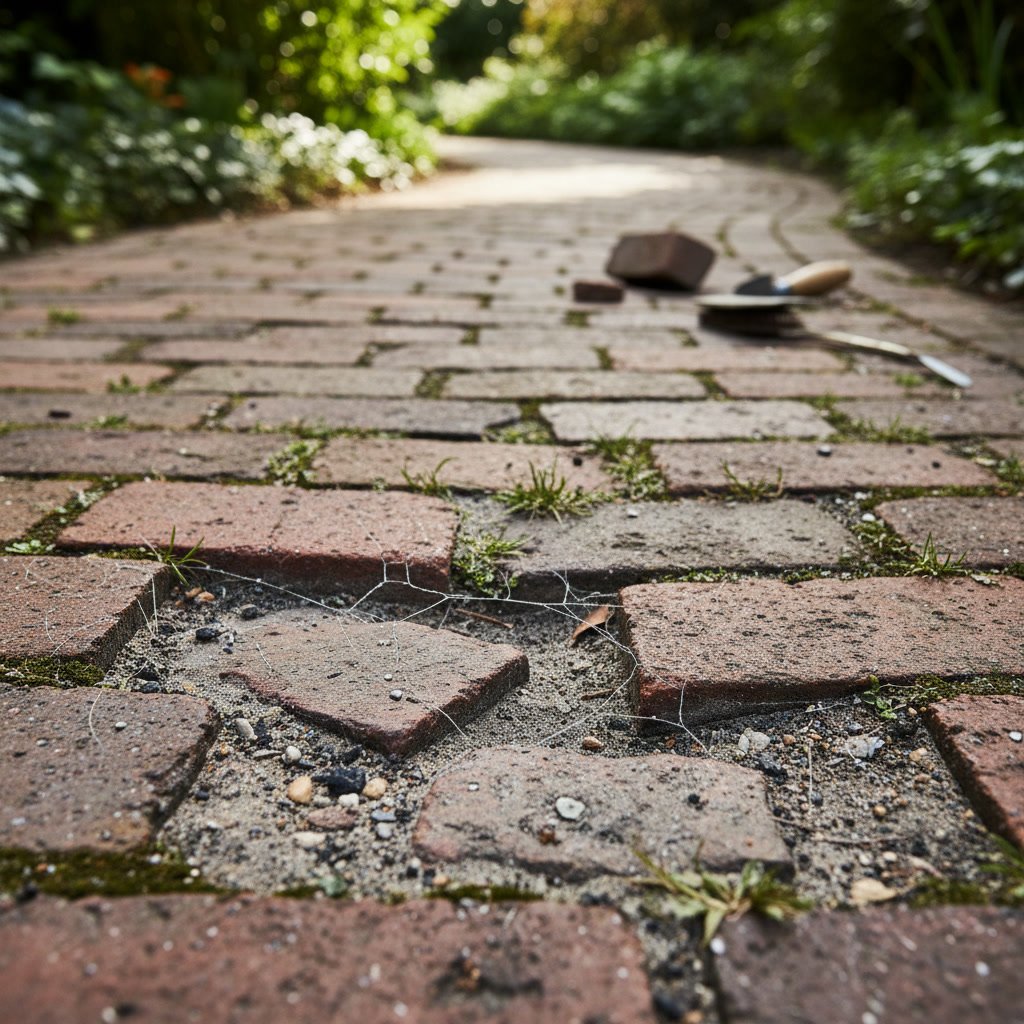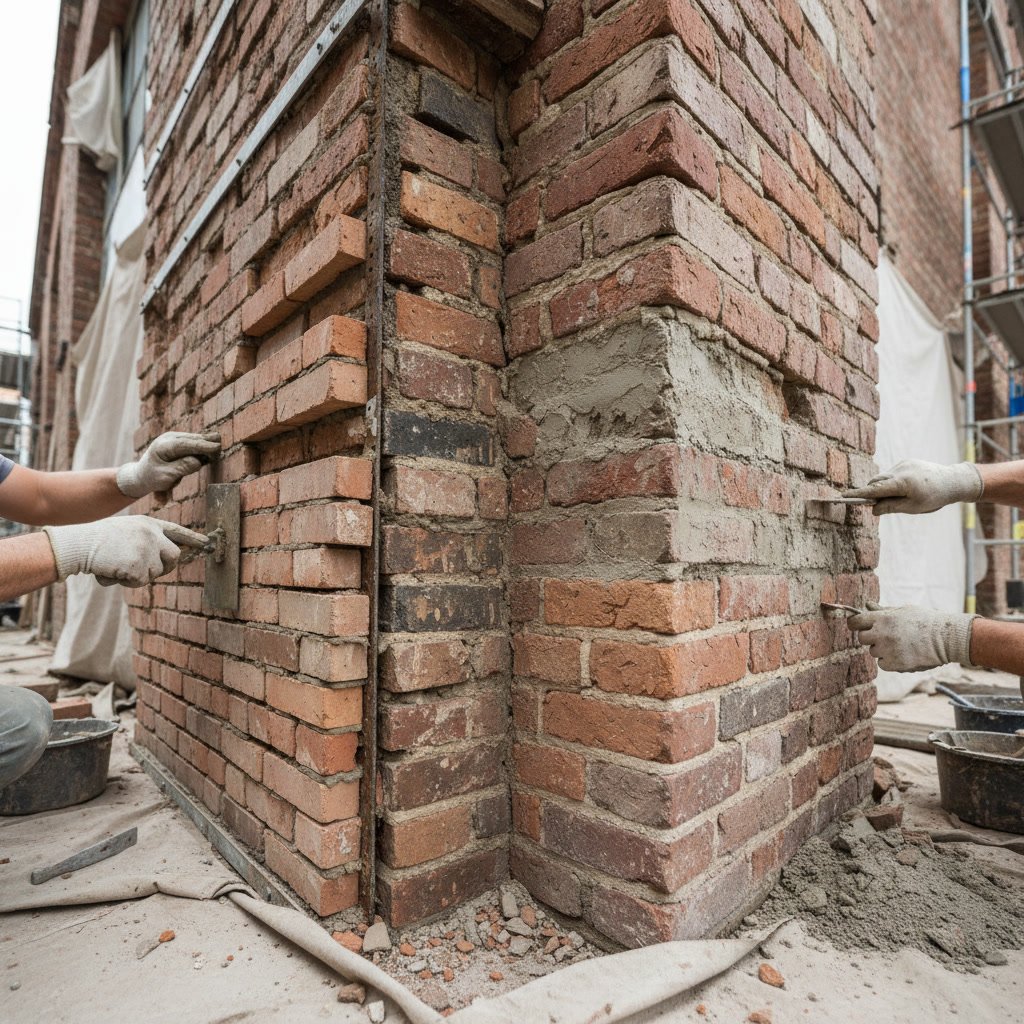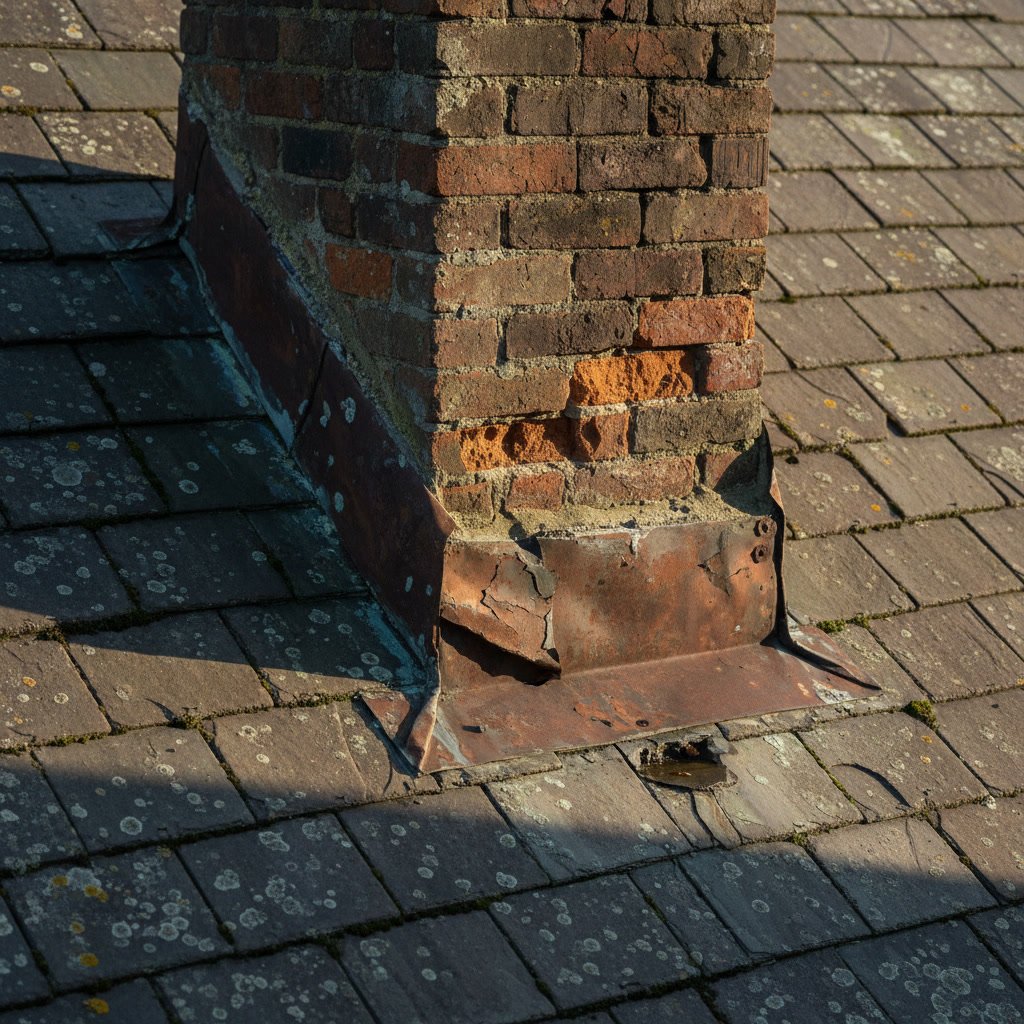
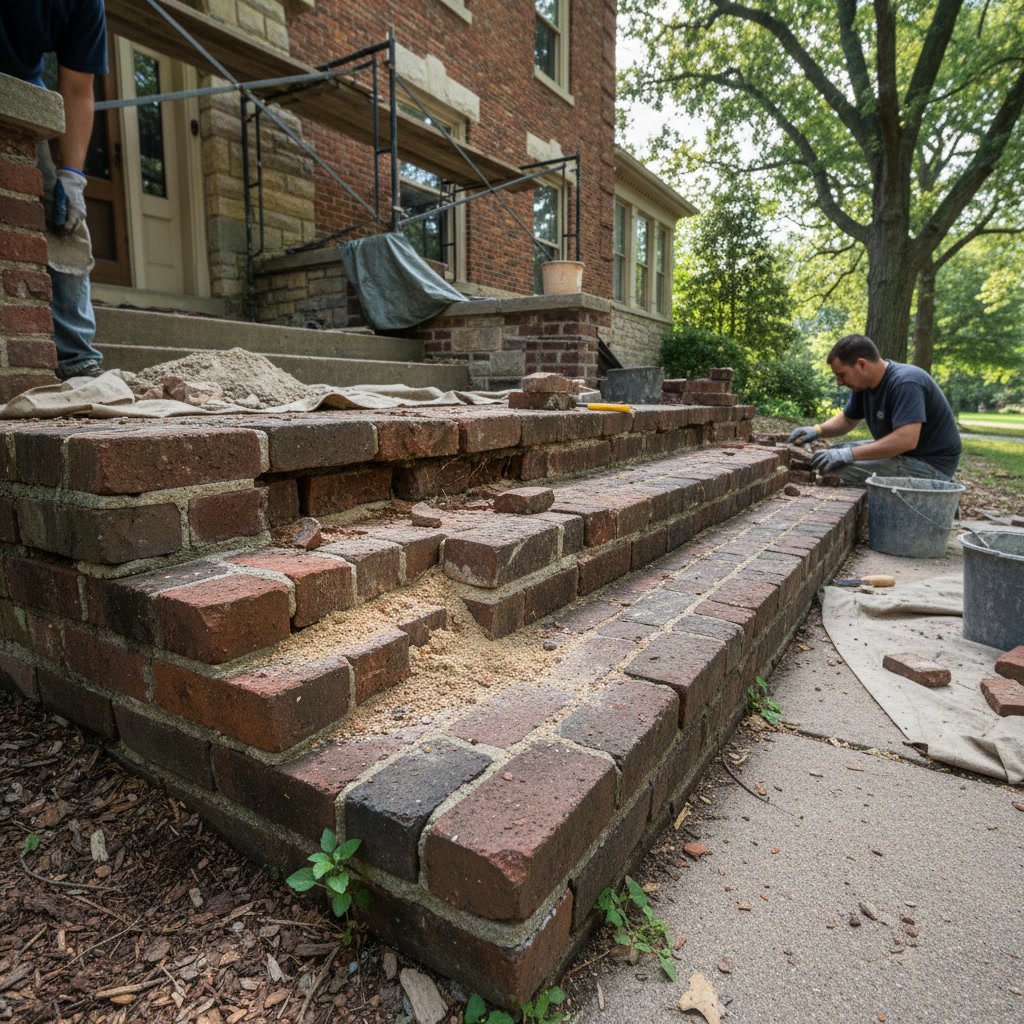
Ballwin homeowners have been dealing with a persistent problem: brick steps crumbling and separating from their foundations. You walk out your front door one morning and notice loose bricks, cracked mortar, or an entire step that seems to shift underfoot. This isn’t just an aesthetic issue. Deteriorating brick steps pose a real safety risk to your family and guests, and the problem tends to worsen rapidly once it starts.
Understanding why brick steps crumbling occurs in Ballwin, MO starts with recognizing the unique environmental and structural factors at play in this area. The freeze-thaw cycles, moisture infiltration, poor drainage, and aging mortar all contribute to accelerated deterioration. This guide breaks down the specific causes, warning signs to watch for, and the professional solutions that can restore your brick steps before the damage becomes irreversible.
The Primary Causes of Brick Step Deterioration
Several factors work together to cause brick steps crumbling in homes throughout the St. Louis area. Understanding these root causes helps you identify problems early and take preventive action.
Freeze-thaw cycles top the list of destructive forces. Water seeps into tiny cracks in mortar joints and brick surfaces. When temperatures drop below freezing, that water expands by roughly 9%, creating internal pressure that widens cracks and pushes materials apart. In Ballwin, where winter temperatures regularly swing above and below freezing, your brick steps can experience dozens of these damaging cycles each season.
Poor drainage around your steps accelerates the problem. When water pools on or around brick surfaces instead of draining away, it creates constant moisture exposure. This saturation gives water more opportunities to penetrate deep into the masonry structure. Many homes built in the 1960s through 1980s lack proper drainage systems around entry steps, making them especially vulnerable.
Aging mortar loses its structural integrity over time. The mortar joints between bricks are actually softer than the bricks themselves by design. This allows the mortar to absorb stress and movement without cracking the bricks. However, after 25 to 30 years, mortar begins to deteriorate, becoming crumbly and losing its ability to hold bricks in place. Once mortar joints fail, individual bricks start to separate and shift.
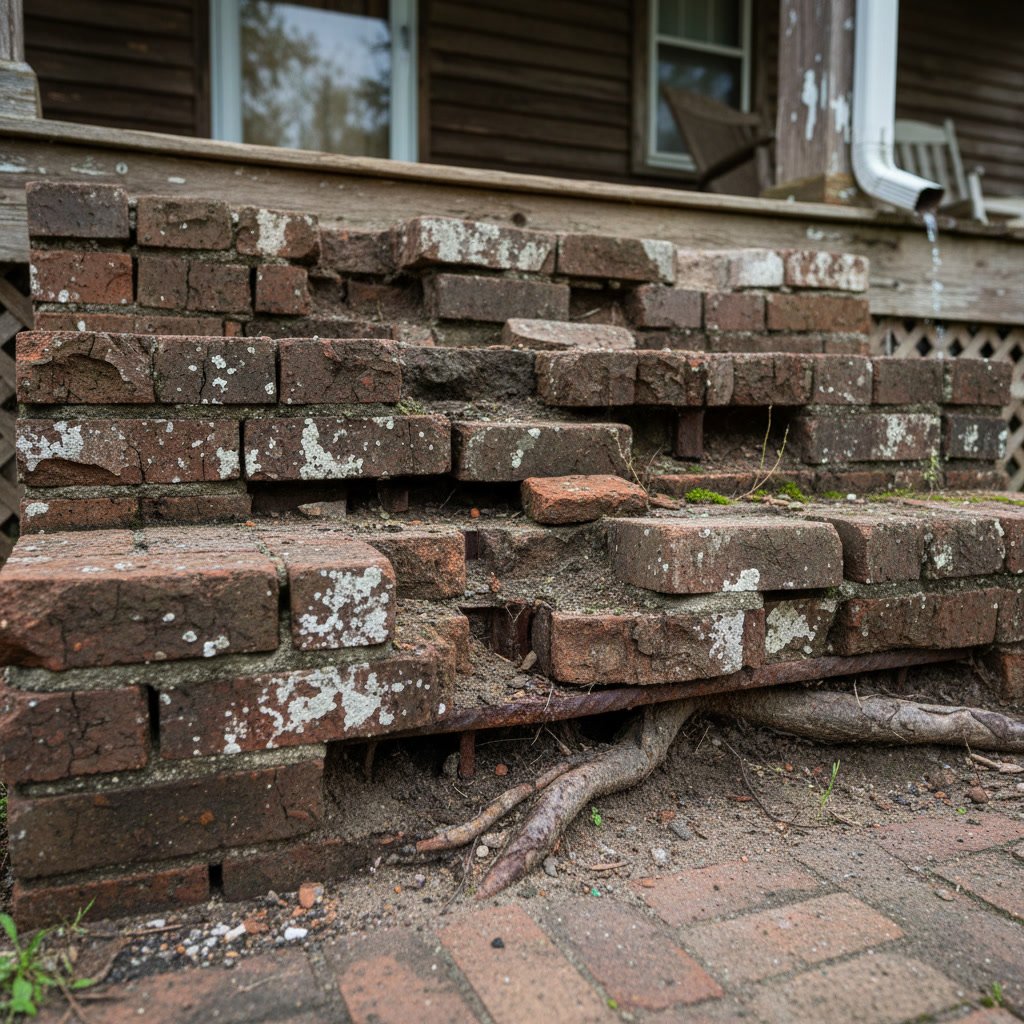
How Water Infiltration Damages Brick Steps
Water is the single most destructive element for masonry structures. Even small amounts of moisture, given enough time and the right conditions, can cause extensive damage to brick steps.
Capillary action draws moisture upward through brick and mortar. Think of it like a sponge soaking up water. The porous nature of masonry materials means they constantly absorb moisture from the ground, especially if the original construction didn’t include a proper moisture barrier beneath the steps.
Surface water from rain and snow runs down your steps, settling into any cracks or gaps. Without proper weatherproofing measures, this water penetrates deeper with each storm. Over months and years, the cumulative effect weakens the entire structure from within.
Efflorescence, those white chalky deposits you might see on brick surfaces, signals active water movement through your masonry. As water travels through brick and mortar, it dissolves salts and minerals, then deposits them on the surface when the water evaporates. While efflorescence itself isn’t damaging, it’s a clear warning sign that moisture is moving through your steps.
The Role of Poor Construction or Installation
Not all brick step problems stem from age and weather. Some issues trace back to the original construction. Steps built without adequate foundations settle unevenly, creating stress points where bricks crack and separate. Missing or inadequate flashing allows water to penetrate behind the brick facade. Improperly mixed mortar may have been too weak from the start, never providing the structural support the steps needed.
Homes in established St. Louis County neighborhoods often reveal these construction shortcuts when homeowners undertake renovation projects. What looked like solid steps for decades suddenly shows its weaknesses once the deterioration process accelerates.
Warning Signs Your Brick Steps Need Attention
Catching brick step problems early saves money and prevents safety hazards. Watch for these common warning signs around your home’s entry and walkways.
Loose or wobbly bricks indicate that mortar joints have failed. If you can wiggle individual bricks with your hand, the structural integrity has been compromised. This creates an immediate tripping hazard and requires prompt repair.
Visible cracks in mortar joints wider than 1/8 inch suggest active deterioration. Hairline cracks are common and often cosmetic, but wider gaps allow water infiltration and signal that tuckpointing work is needed soon.
Separation between steps and the house foundation reveals a serious structural issue. This gap might start at just 1/4 inch but can widen to an inch or more as the steps continue to pull away. The separation typically results from poor foundation support, frost heave, or water damage undermining the base.
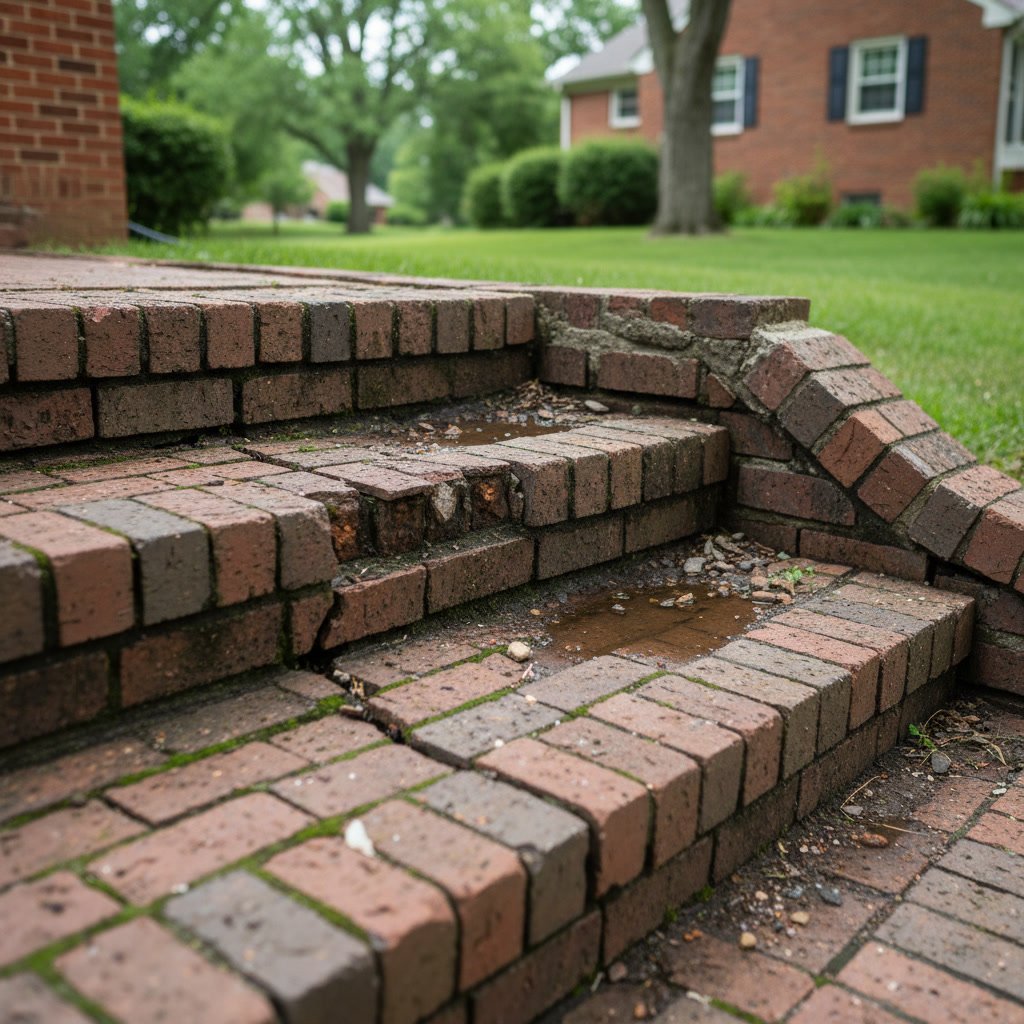
Surface Spalling and Brick Faces Flaking Off
Spalling occurs when the face of a brick breaks away in layers or chunks. This damage usually results from water that has frozen inside the brick itself. Once spalling begins on one brick, it often spreads to adjacent bricks because it indicates a systemic moisture problem.
Spalled bricks can’t be repaired. They require complete replacement, which is why early intervention matters. Professional brick restoration can address the moisture issues before extensive spalling forces a complete rebuild.
Steps That Feel Spongy or Unstable
If your brick steps flex or feel soft when you walk on them, the problem has progressed beyond surface damage. This movement indicates that the foundation or substrate beneath the bricks has deteriorated. The brick structure may look intact from above, but the support system has failed underneath.
This type of damage requires immediate professional assessment. Continuing to use unstable steps risks sudden collapse and serious injury.
Why Ballwin Homes Face Unique Challenges
The Ballwin area presents specific environmental factors that accelerate brick steps crumbling compared to other regions.
Clay-rich soil common throughout the St. Louis region expands when wet and contracts when dry. This constant movement creates pressure against foundation walls and anything built on shallow footings, including brick steps. Over years, this soil movement can shift steps away from the house or crack supporting structures.
The region’s humidity levels stay elevated much of the year. Summer months often see humidity above 70%, creating conditions where masonry materials remain damp for extended periods. This prolonged moisture exposure gives water more opportunity to penetrate deep into brick and mortar.
Temperature swings in the St. Louis area are more extreme than in many parts of the country. A January day might start at 15 degrees and warm to 45 by afternoon. These rapid temperature changes create more frequent freeze-thaw cycles, multiplying the damage to vulnerable masonry.
Pro Tip: Homes built between 1960 and 1990 in Ballwin often used softer clay bricks that are more susceptible to freeze-thaw damage than modern engineered bricks. If your home falls in this age range, consider having your brick steps professionally inspected every three to five years.
The Risks of Ignoring Crumbling Brick Steps
Postponing repairs on deteriorating brick steps creates several escalating problems.
Safety hazards top the list. Loose bricks, uneven surfaces, and unstable steps cause trips and falls. A visitor injured on your property could result in significant liability. Many homeowner insurance policies require that known hazards be repaired promptly, potentially leaving you exposed if you’ve been aware of the problem.
Repair costs multiply as damage progresses. Small mortar joint repairs might cost a few hundred dollars when caught early. Wait until multiple bricks have loosened, the foundation has shifted, or water has damaged the substrate, and you’re looking at complete reconstruction costing thousands. The difference between minor masonry restoration and full replacement often comes down to timing.
Water that enters through damaged brick steps doesn’t stop there. It travels along foundations, into crawl spaces, and behind exterior walls. This moisture migration can lead to basement leaks, wood rot, mold growth, and structural damage far beyond the steps themselves.
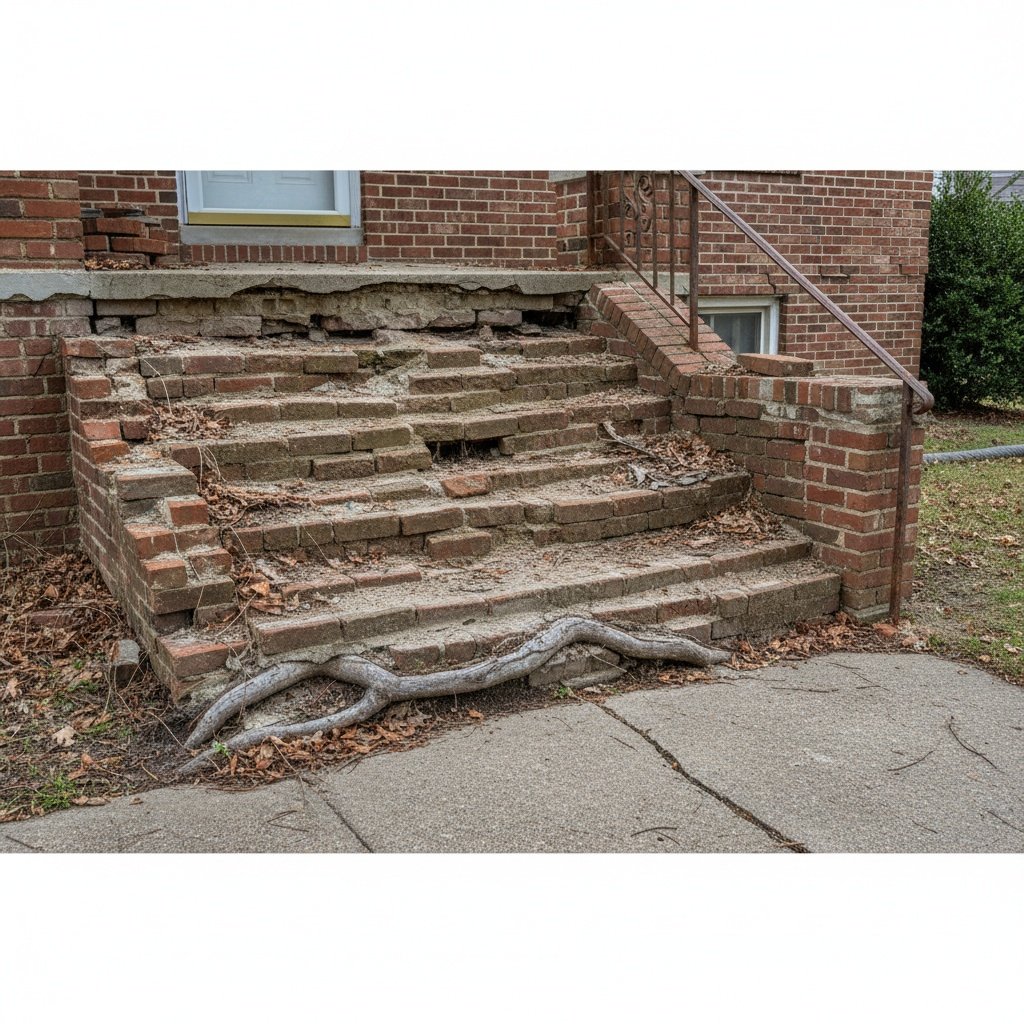
Professional Repair Solutions for Damaged Brick Steps
Addressing brick steps crumbling requires different approaches depending on the extent of damage and the underlying causes.
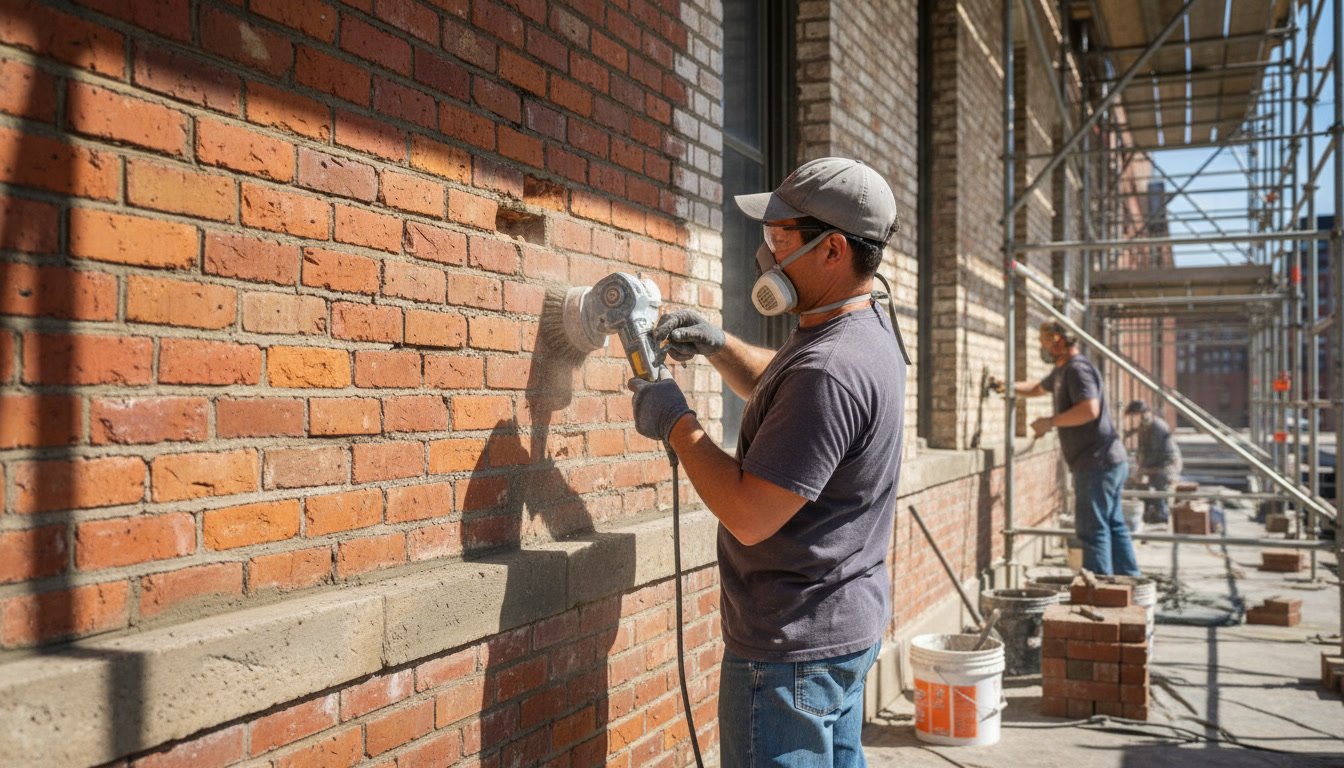
Tuckpointing repairs deteriorated mortar joints while the bricks remain sound. A mason removes old, crumbling mortar to a depth of 3/4 to 1 inch, then fills the joints with fresh mortar matched to the original in both strength and color. When performed correctly by experienced professionals, tuckpointing can add 20 to 30 years of life to brick steps. Our detailed guide on tuckpointing vs repointing explains the technical differences between these repair methods.
Partial rebuilds address sections where bricks have spalled, cracked, or separated beyond repair. The damaged area is carefully dismantled, the foundation is inspected and repaired if needed, and new bricks are installed to match the existing structure. This approach works well when damage is localized to specific areas rather than throughout the entire step structure.
Complete reconstruction becomes necessary when foundation problems, extensive brick damage, or structural instability affect the entire stairway. While this represents the most significant investment, it provides an opportunity to correct original design flaws, improve drainage, add proper moisture barriers, and use materials better suited to withstand the local climate.
Preventive Measures After Repair
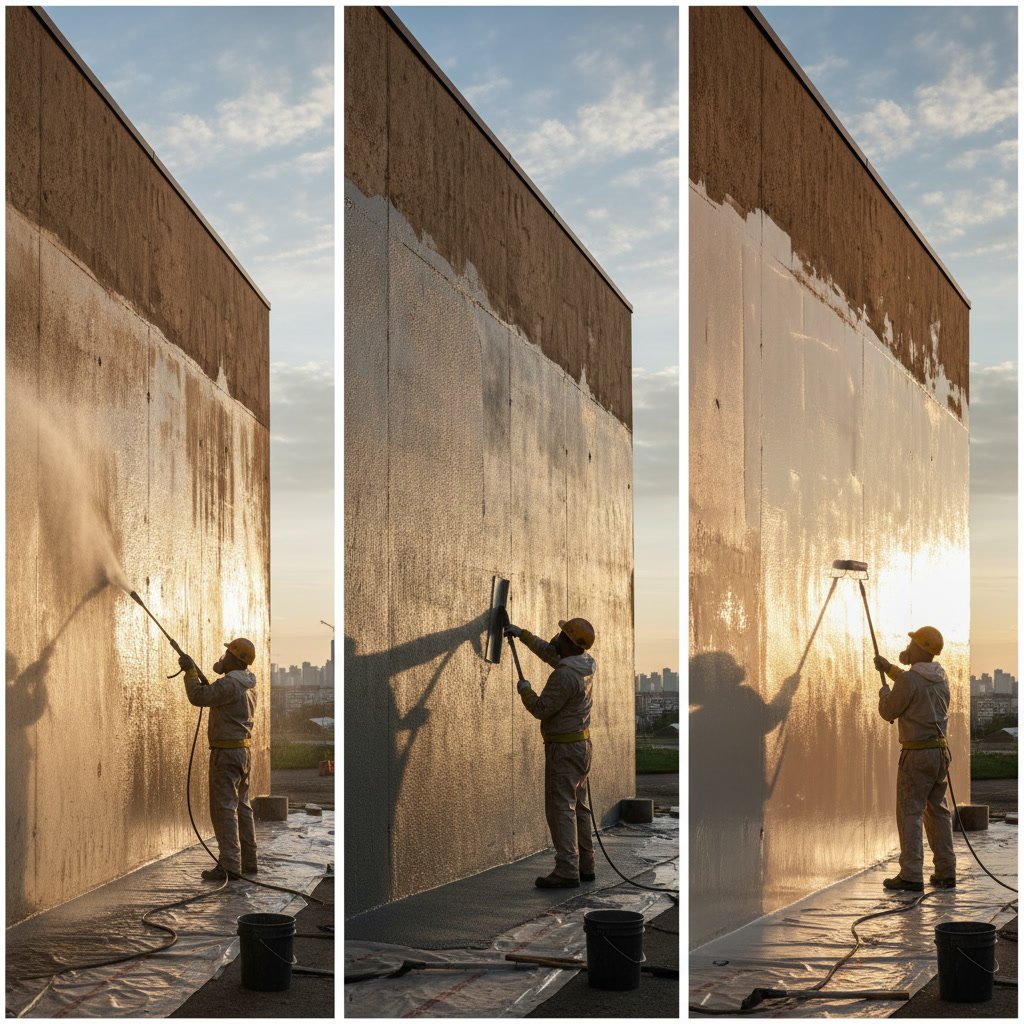
Once your brick steps are restored, taking preventive steps extends their lifespan significantly. Applying breathable masonry sealers protects against water infiltration while allowing moisture vapor to escape. This balance is critical because completely waterproofing brick can trap moisture inside, causing more damage than it prevents.
Improving drainage around steps keeps water moving away from masonry surfaces. This might include adjusting grading, installing channel drains, or redirecting downspouts. Similarly, sealing adjacent walkways and driveways prevents water from pooling near your steps.
Regular maintenance inspections catch small problems before they become major repairs. Having a professional examine your brick steps every few years costs little but can identify issues at stages when repairs remain simple and affordable.
Frequently Asked Questions
How long do brick steps typically last before needing repair?
Well-constructed brick steps with quality materials and proper drainage typically last 25 to 40 years before requiring significant repairs. However, steps built without adequate foundations, proper flashing, or in areas with poor drainage may show problems in as little as 10 to 15 years. Environmental factors and maintenance practices also affect longevity significantly.
Can I repair crumbling brick steps myself or do I need a professional?
Minor tuckpointing on a few joints is possible for experienced DIYers, but most brick step repairs require professional expertise. Proper mortar mixing, matching existing materials, ensuring structural stability, and addressing underlying drainage or foundation issues demand specialized knowledge and tools. Improper repairs often make problems worse and end up costing more to fix correctly later.
What’s the difference between brick steps crumbling and normal aging?
Normal aging appears as slight weathering, minor efflorescence, or small hairline cracks in mortar joints. Crumbling involves loose bricks, mortar that falls out when touched, visible gaps between bricks, separation from foundations, or bricks with faces that flake off. If you can wiggle bricks by hand or if steps feel unstable underfoot, you’re beyond normal aging into active deterioration.
Will sealing my brick steps prevent them from crumbling?
Sealing helps prevent water infiltration but isn’t a complete solution and won’t repair existing damage. If mortar joints are already deteriorated or bricks are cracked, sealer simply traps moisture inside, potentially accelerating damage. The proper sequence is repair first, then apply appropriate breathable sealers as part of a comprehensive maintenance plan. For more information on protective treatments, see our guide on types of weatherproofing for brick homes.
How much does it cost to repair crumbling brick steps in the St. Louis area?
Costs vary widely based on damage extent and repair type. Minor tuckpointing might run $500 to $1,500 for a typical residential entry. Partial rebuilds of severely damaged sections typically cost $2,000 to $5,000. Complete reconstruction of a full set of entry steps ranges from $5,000 to $12,000 or more depending on size, design complexity, and material choices. Getting a professional assessment early often means repairs fall on the lower end of this range.
Protecting Your Investment and Your Safety
Brick steps crumbling in Ballwin homes results from a combination of freeze-thaw cycles, moisture infiltration, aging mortar, and sometimes poor original construction. The good news is that professional masonry restoration can address these problems effectively, whether you need minor tuckpointing or complete reconstruction. Taking action when you first notice warning signs prevents minor issues from becoming major safety hazards and expensive rebuilds.
Massey Tuckpointing & Masonry has helped homeowners throughout Ballwin and surrounding areas restore their brick steps and protect their homes since 2002. Our family-owned company understands the specific challenges facing homes in this region, and we provide honest assessments and quality workmanship on every project. If you’ve noticed signs of deterioration on your brick steps, contact us at +13142009488 for a professional evaluation and detailed repair options tailored to your home’s specific needs.